
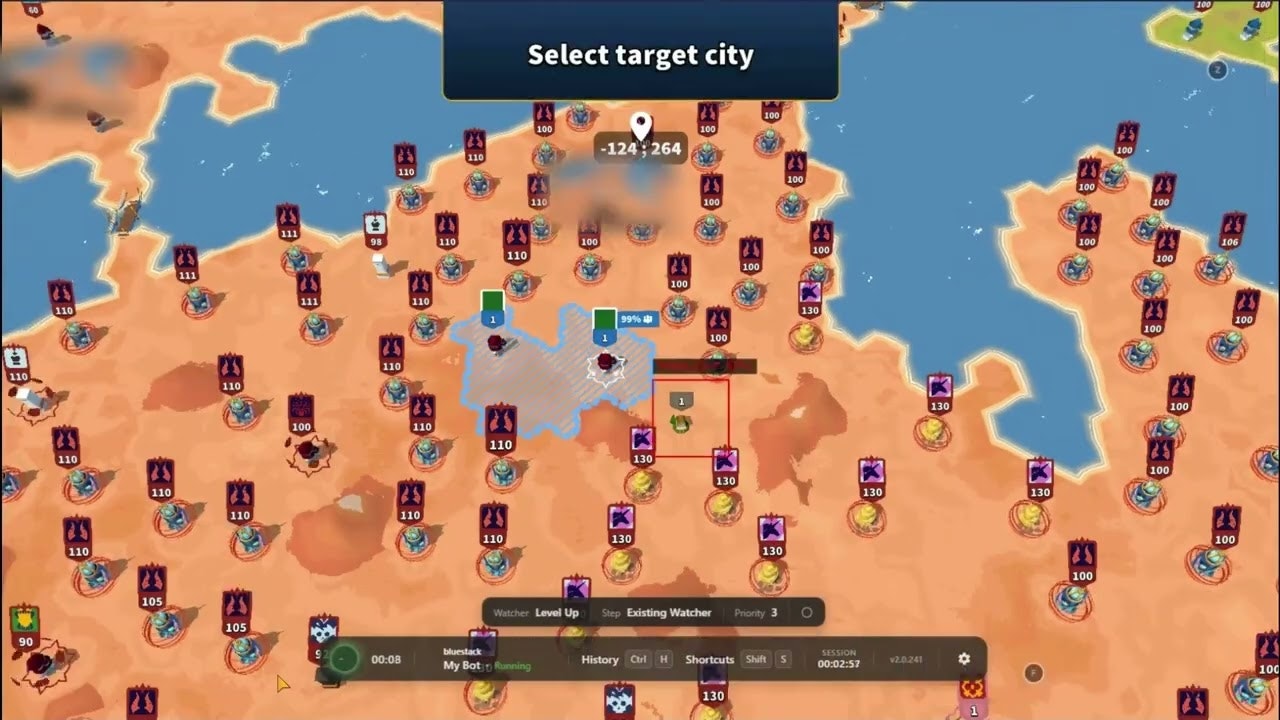
What defines safe botting in 2026
The line between helpful automation and account termination is thinner than ever. In 2026, the primary differentiator for "safe" botting is authorization. Unsafe tools are unauthorized third-party injectors that modify game memory or client files. These are easily detected by anti-cheat systems and violate Terms of Service, carrying the immediate risk of permanent bans and, in some jurisdictions, legal action under the DMCA or CFAA.
Safe automation relies on official channels. This includes AI features built directly into the game by the developer, or external tools that interact with the game strictly through approved APIs. These methods do not alter the game client. They operate as external observers or authorized agents, making them invisible to memory-scanning anti-cheat software.
The industry is shifting toward this model. A recent Google Cloud survey showed that 87% of video game developers are now using AI agents to streamline tasks. This internal adoption signals that the "safe" path forward is integration, not intrusion. When evaluating any AI tool for MMOs or grinding, the first question is not about its speed, but about its source. If it is not built by the developer or approved via official documentation, it is a liability.
Top AI game bots for MMO grinding
Automated grinding is the fastest route to leveling up, but it is also the most dangerous. Game developers treat unauthorized automation as a breach of contract and, in many jurisdictions, a violation of the Digital Millennium Copyright Act (DMCA). Using a bot that injects code or manipulates memory can result in immediate, permanent account termination and, in rare but documented cases, legal action from publishers protecting their intellectual property.
To survive, you must distinguish between tools that simulate human input and those that hack the client. The safest path involves macro-based automation or high-level AI wrappers that operate at the application layer, never touching the game’s internal code. Below are the specific tools and hardware setups that balance efficiency with the lowest possible risk profile.
Macro-Based Automation: MacroMaker
MacroMaker represents the safest tier of automation. It does not interact with the game’s memory or code. Instead, it records and replays human-like mouse movements and keystrokes. Because it operates entirely outside the game client, it is virtually undetectable by anti-cheat systems like BattlEye or Easy Anti-Cheat. It is ideal for repetitive tasks such as gathering resources or clicking through menus, provided you configure random delays between actions to mimic human variance.
AI Wrappers: Stracti
For players who need more complex decision-making than simple macros allow, Stracti offers a visual programming environment. It uses a node-based system to create logic chains without writing code. This approach is safer than traditional botting because it relies on screen recognition and input simulation rather than memory injection. It allows for conditional logic—such as "only attack if health is low"—which makes the bot’s behavior appear more organic and less like a script.
Hardware Safety: Stream Deck + Macro Keypads
Software is only half the battle. Hardware peripherals can add a layer of physical separation that makes detection harder. Using a programmable keypad or Stream Deck to trigger macros means the input comes from a distinct device ID, not the primary gaming mouse. This physical separation, combined with software that randomizes input timing, creates a "human-like" signature that is difficult for anti-cheat algorithms to flag as automated.
Comparison of Safety and Features
| Tool Type | Detection Risk | Complexity | Best For |
|---|---|---|---|
| Macro Recorder | Very Low | Low | Repetitive clicks, resource gathering |
| AI Wrapper (Stracti) | Low | Medium | Conditional logic, combat rotations |
| Memory Injection | Extreme | High | Avoid entirely |
| Kernel-Level Drivers | Extreme | High | Avoid entirely |
Essential Gear for Safe Automation
To implement these tools effectively, you need hardware that supports macro execution without triggering security flags. The following items are recommended for setting up a safe, efficient grinding station.


As an Amazon Associate, we may earn from qualifying purchases.
Final Safety Checklist
Before running any automation, verify the following:
- No Memory Access: Ensure the tool does not read or write to the game’s memory.
- Randomized Delays: Always add random delays between actions to mimic human reaction times.
- Official Terms: Read the game’s End User License Agreement (EULA) to understand what constitutes a violation.
- Backup Accounts: Never use your primary account for testing. Use a secondary account to test safety before committing your main progress.
Automated trading tools for virtual economies
Managing a virtual economy manually is a full-time job that leaves you vulnerable to both market volatility and account bans. Automated trading bots promise to handle the micromanagement of grinding and flipping, but they operate in a legal gray area that can result in permanent account termination. The risk is not just about losing in-game currency; it is about violating the Terms of Service (ToS) that govern every major MMO. When developers detect non-human trading patterns, they do not issue warnings—they freeze assets and ban accounts.
This section focuses on specific software solutions that automate these processes. Unlike generic scripts, these tools are designed to mimic human interaction to avoid detection. However, the line between convenience and cheating is thin. Players must understand that using third-party automation is a breach of contract with the game provider. The following tools represent the current landscape of virtual economy automation, each carrying distinct risks and features.



As an Amazon Associate, we may earn from qualifying purchases.
The primary danger in automated trading is the pattern recognition used by anti-cheat systems. These systems look for statistical anomalies: buying at exact millisecond intervals, trading with zero human error, or operating 24/7 without breaks. Tools that claim to be "undetectable" are often outdated the moment they are released. Developers like Blizzard and Jagex regularly update their detection algorithms to flag these specific behaviors. Therefore, the safety of any automated tool depends on its ability to introduce realistic delays and human-like variability into every transaction.
Legal precedents regarding game botting are sparse but increasingly hostile toward automation services. While few players have been sued personally, game companies have successfully shut down botting operations and banned thousands of accounts in bulk. The argument is straightforward: automation undermines the integrity of the game economy and violates the user agreement. Players who rely on these tools are essentially gambling their account value against the game developer's enforcement capabilities. There is no appeal process for algorithmic bans, making the choice to automate a high-stakes decision.
Legal risks and ban avoidance strategies
Using AI bots to automate gameplay or generate in-game assets carries significant legal and account-level risks. Game developers enforce strict Terms of Service (ToS) that prohibit unauthorized automation, and violations often result in immediate, irreversible account bans. Beyond platform penalties, the legal landscape for AI-generated content remains ambiguous. Under current copyright laws in many jurisdictions, AI-generated assets lack the human authorship required for traditional copyright protection, leaving creators vulnerable to intellectual property disputes.
To mitigate these risks, prioritize tools that operate within the boundaries of official APIs or offer transparent, human-in-the-loop workflows. Avoid "black box" bots that inject code directly into game memory, as these are easily detected by anti-cheat systems like BattlEye or Easy Anti-Cheat. Instead, look for solutions that mimic human input patterns or assist with non-competitive tasks, such as inventory management or data logging, where developer tolerance is higher.
Staying informed about legal precedents is also essential. As AI agents become more autonomous, courts and regulatory bodies are beginning to clarify liability for AI-generated content. For now, assume that any fully automated action that provides an unfair advantage or disrupts the game economy is a violation. Protect your investment by using reputable, established tools that offer clear compliance guidelines and avoid obscure, unverified scripts that pose a higher risk of detection and legal scrutiny.
Frequently asked questions about game bots
Is using AI bots in MMOs legal? While creating AI tools isn't illegal, using them to automate gameplay in games like World of Warcraft or Final Fantasy XIV violates the Terms of Service. Developers explicitly ban third-party automation, and enforcement actions can result in permanent account termination. The legal risk isn't criminal liability but the immediate loss of your investment and access.
Will AI bots be banned in 2026? Detection systems are becoming more aggressive. As AI models shift from simple chat to autonomous agents with tool-use capabilities, anti-cheat vendors are updating their signatures to catch these patterns. If you are using a bot that mimics human input, expect tighter scrutiny and higher ban rates as the technology becomes mainstream.
Do most developers use AI now? Yes. A recent Google Cloud survey showed that 87% of videogame developers use AI agents to streamline tasks. However, this refers to internal development efficiency, not player-facing automation. Using these same technologies to grind in an MMO is a direct violation of the game's rules, not a standard practice endorsed by the industry.
No comments yet. Be the first to share your thoughts!