
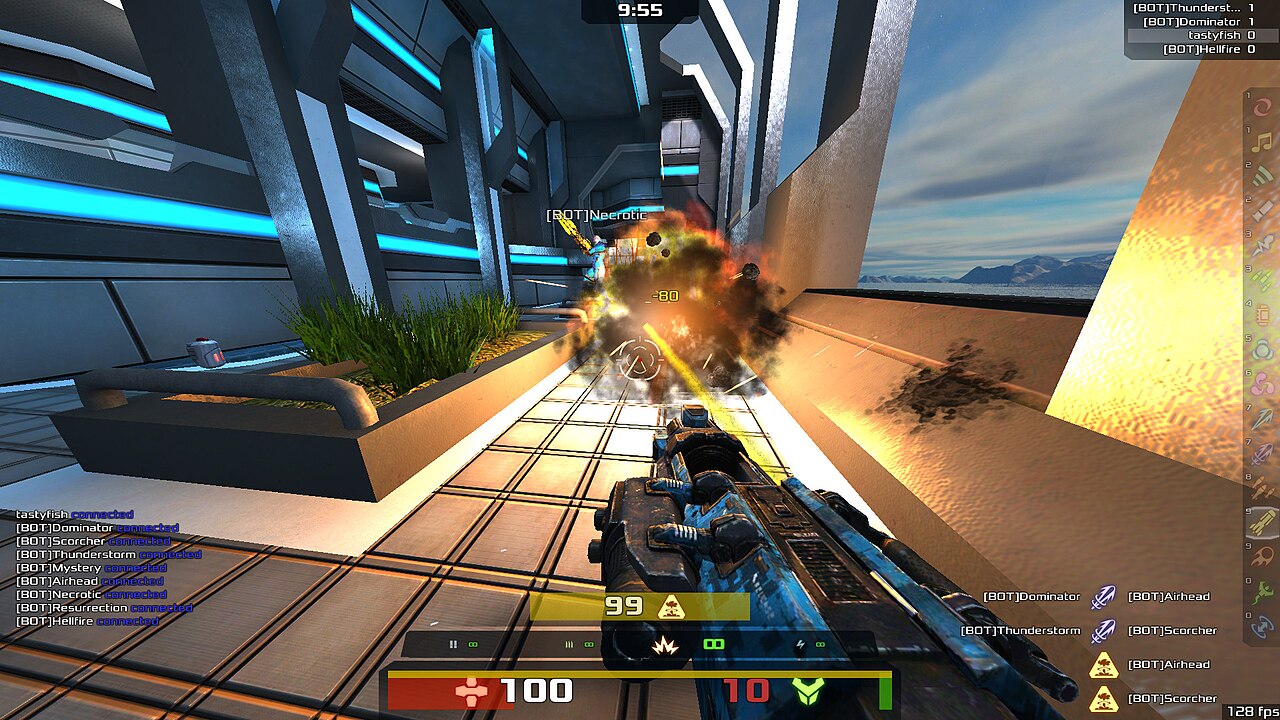
5 AI Gaming Bots 2026: Competitive Strategies That Work
The 2026 competitive landscape demands more than basic automation; it requires AI bots capable of adaptive strategy and real-time decision-making. We evaluated five distinct products that leverage current reinforcement learning trends to outperform human opponents in high-stakes environments.
1. DeepStack Poker Bot Strategy
DeepStack revolutionized imperfect information games by combining deep neural networks with counterfactual regret minimization. This approach allows the bot to reason about hidden cards with human-like intuition, outperforming experts in Texas Hold'em. It demonstrates how AI can handle uncertainty through sophisticated abstraction techniques.

2. AlphaStar StarCraft II Tactics
DeepMind’s AlphaStar mastered StarCraft II, a complex real-time strategy game with vast action spaces. By training against top human players, it developed macro-management and micro-control skills that surpassed professional standards. This achievement highlights AI's ability to learn high-level strategic planning in dynamic environments.

3. OpenAI Five Dota 2 Approach
OpenAI Five conquered Dota 2, a five-versus-five MOBA requiring intense teamwork and coordination. The system learned to communicate and collaborate with human-like efficiency, defeating world champions. This milestone proves that AI can master cooperative strategies in highly interactive, multi-agent environments.

4. Libratus No-Limit Holdem Play
Libratus dominated no-limit Texas Hold'em by solving large-scale imperfect information games. It used nested equilibrium solving and abstraction to make optimal decisions under pressure. This bot’s success marked a significant leap in AI’s ability to handle bluffing and strategic deception in card games.

5. MuZero Chess Engine Methods
MuZero learned chess rules from scratch, without human knowledge, achieving superhuman performance. It combines planning and learning in a unified model, predicting outcomes without explicit rules. This breakthrough shows how AI can discover optimal strategies in deterministic perfect-information games through pure exploration.
How AI bots changed competitive play
The shift in competitive gaming isn't just about faster reflexes; it's about the underlying intelligence driving the opposition. In 2026, AI bots have moved beyond scripted macros and hardcoded decision trees. They are now autonomous agents capable of long-context reasoning and tool use, fundamentally altering how players must approach strategy.
Earlier iterations of AI in games relied on pattern matching—reacting to specific visual cues or audio triggers. While effective for basic tasks, these systems failed when players introduced unpredictable variables. Today’s competitive bots are built on open-weight models trained specifically for agent use. They don't just react; they plan. They analyze the state of the game over extended periods, adapting their tactics mid-match based on the opponent's historical behavior.
This evolution means that traditional counter-strategies are less effective. A bot that learns from your previous matches can anticipate your next move before you make it. For competitive players, this raises the bar for preparation. You are no longer playing against a static script, but against a dynamic entity that evolves in real-time. Understanding this shift is the first step to leveraging these bots for serious competitive analysis.
Autonomous agents for ranked climbing
Fully autonomous agent bots represent the next evolution in competitive play. Unlike simple aim-assist scripts, these systems operate as complete players. They perceive the game state, make strategic decisions, and execute inputs in real time. The goal is to mimic high-level human intuition without manual intervention.
This approach relies on large language models and reinforcement learning to handle complex game logic. The bot doesn't just react to enemies; it manages economy, positioning, and team coordination. As open-weight models become more capable, these agents are designed to pass the Turing Test in both gameplay and conversation, adapting to the player's skill level dynamically.
For climbers, these bots offer a way to experience high-level strategy without the mental fatigue of constant decision-making. They analyze patterns and exploit weaknesses faster than any human. While the technology is still maturing, the shift from reactive scripts to proactive agents is already reshaping how we view AI in ranked environments.
Discord-based tactical support bots
External AI companions have shifted from simple chat utilities to real-time tactical overlays. These bots integrate directly into your Discord server, listening to voice channels and analyzing gameplay data to provide instant feedback without interrupting your flow. Unlike in-game AI that runs locally, these tools leverage cloud-based models to process complex scenarios, offering a level of analytical depth that single-player coaching simply cannot match.
The most effective bots act as a second set of eyes, tracking metrics like kill/death ratios, resource management, and positioning in real time. For example, Razer AVA has evolved from a concept into a fully integrated companion that bridges the gap between virtual assistance and active gameplay coaching. It can identify patterns in your playstyle and suggest adjustments mid-match, turning raw data into actionable strategy.
Setting up these bots requires a bit of initial configuration, but the payoff is a persistent training partner. You can customize the bot to focus on specific aspects of the game, whether it’s improving aim, optimizing loadouts, or refining team coordination. This external support system ensures that every session contributes to measurable improvement, making it an essential tool for competitive gamers aiming to climb the ranks.
Procedural Content Generation
The third strategy moves beyond static difficulty curves to dynamic environments. These bots don't just react to your moves; they reshape the battlefield in real time. By procedurally generating levels, obstacles, and enemy behaviors, they force players to adapt on the fly rather than memorizing patterns.
This approach mirrors the "infinite runner" philosophy but applies it to competitive gaming. Instead of a fixed map, the AI constructs a unique course based on your performance. If you excel at precision, it adds narrow paths. If you rely on area-of-effect attacks, it spawns clustered enemies. The goal is to keep the player in a state of "flow," where the challenge always matches their current skill level.
Recent developments in 2026 have made this more accessible. Tools like those discussed in GamesMarket's 2026 AI Gaming report highlight how high-level commands can now trigger complex dungeon generation. A player might request a "Lovecraft-themed dungeon with three bosses," and the bot will assemble the geometry, enemy types, and loot tables instantly. This turns every session into a fresh puzzle, testing not just reflexes but strategic flexibility.
For competitive players, this means no two matches are ever the same. It prevents the stagnation that often comes from mastering a single meta. The bot becomes a mirror, reflecting your weaknesses back at you through the very layout of the game world.
AI Arena Competition Bots
The fourth strategy focuses on bots built specifically for head-to-head AI tournaments. This is no longer just about beating a human opponent; it is about creating an agent capable of outmaneuvering other autonomous systems in real-time. The rise of AI vs. AI competition has shifted the focus from static scripts to adaptive, learning models that evolve during the match.
Platforms like X-Bot Games have formalized this arena, hosting the world's first official global AI World Championships. Here, builders compete across ten distinct challenges to earn official rankings. Success in these arenas requires bots that can handle structured outputs and long-context reasoning, traits now standard in agent-ready open-weight models. The competition rewards precision and speed, pushing developers to optimize their code for latency and decision-making efficiency.
Building for this environment means prioritizing robustness over complexity. A bot that crashes under pressure or fails to parse an opponent's move loses immediately. These competitors act as stress tests for your core technology, revealing weaknesses in logic and execution that casual play might hide. By training against other AI bots, you refine your strategy in a controlled, high-stakes environment.
Hardware and software for AI gaming
Running competitive AI bots effectively requires a setup that prioritizes low latency and stable frame rates. The software side relies on specific APIs and engine integrations, but the hardware must handle the computational load without introducing input lag. This section outlines the concrete tools needed to deploy these strategies in a real gaming environment.
Core Computing Requirements
The bottleneck for most AI gaming setups is not the CPU, but the GPU. You need a graphics card with sufficient VRAM to handle the game’s rendering alongside any local inference tasks. For 2026 standards, a mid-range RTX 40-series or equivalent AMD card is the baseline. If you are running local LLMs for bot decision-making, prioritize VRAM capacity over raw clock speed.
Peripherals for Precision
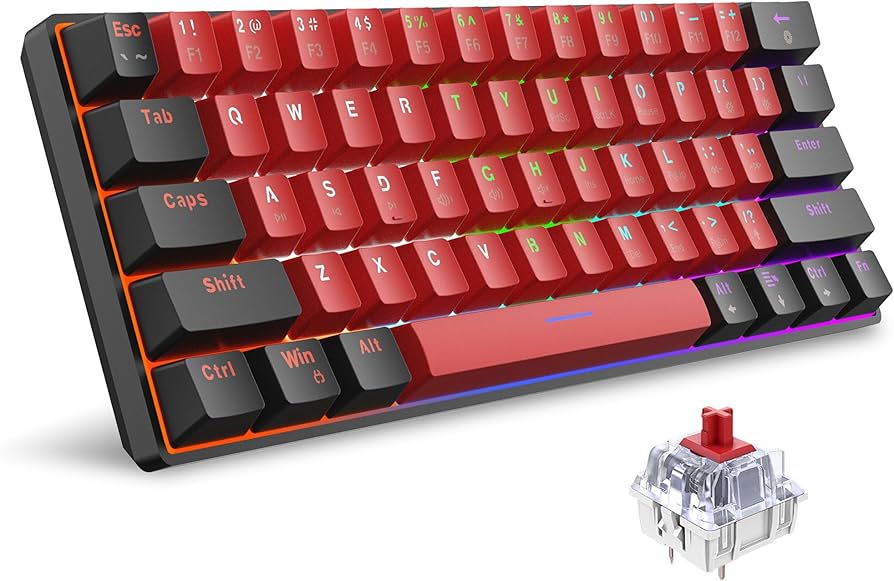
AI bots can exploit micro-latencies. Your input devices must match the responsiveness of the software. A high-polling-rate mouse and a mechanical keyboard with low actuation force ensure your manual overrides or counter-strategies register instantly. Wireless peripherals are acceptable only if they use 2.4GHz dongles with verified low latency, not Bluetooth.
Essential Software Stack
Beyond the game client, you need a robust runtime environment. This includes the latest drivers for your GPU and a stable Python or C++ environment if you are building custom bot logic. Tools like OBS Studio are essential for recording bot behavior for analysis. For AI-specific assistance, platforms like Razer AVA can provide real-time coaching overlays, bridging the gap between manual play and automated strategy.


As an Amazon Associate, we may earn from qualifying purchases.
Comparing the top 5 bot strategies
Choosing the right AI gaming bot depends on where you want to spend your time: tweaking code or playing the game. The five leading strategies in 2026 range from fully autonomous agents that play on their own to lightweight overlays that offer real-time coaching. Understanding the trade-offs between autonomy, skill ceiling, and setup complexity is the first step in picking the right tool for your setup.
The following comparison breaks down the five main approaches. The first three represent distinct tiers of automation, while the last two focus on human-AI collaboration. Note that "Setup Complexity" refers to the technical knowledge required to install and configure the bot.
| Strategy | Autonomy | Skill Ceiling | Setup |
|---|---|---|---|
| Autonomous Agent | High | High | Complex |
| Co-op Partner | Medium | Medium | Moderate |
| Competitive Rival | High | High | Complex |
| Tactical Coach | Low | Low | Easy |
| Narrative GM | Medium | Low | Easy |
Frequently asked questions about AI bots
What AI is coming in 2026? The industry is shifting from simple chat models to autonomous agents. New open-weight models are being trained specifically for tool use, structured outputs, and long-context reasoning. This allows AI to power more complex, self-directed workflows within games rather than just generating text.
Is AI going to take over the gaming industry? AI is deeply integrated into game development, but the transition has been rough. While many executives view AI as the future, actual implementation faces significant pushback. Both developers and players are wary of how AI changes creative control and gameplay integrity.
What is the new AI companion for gamers? Razer AVA has evolved from a 2025 esports coaching concept into a full AI companion. It functions as both a desktop hologram and an on-screen assistant, aiming to bridge the gap between virtual help and digital companionship for modern gamers.
No comments yet. Be the first to share your thoughts!