
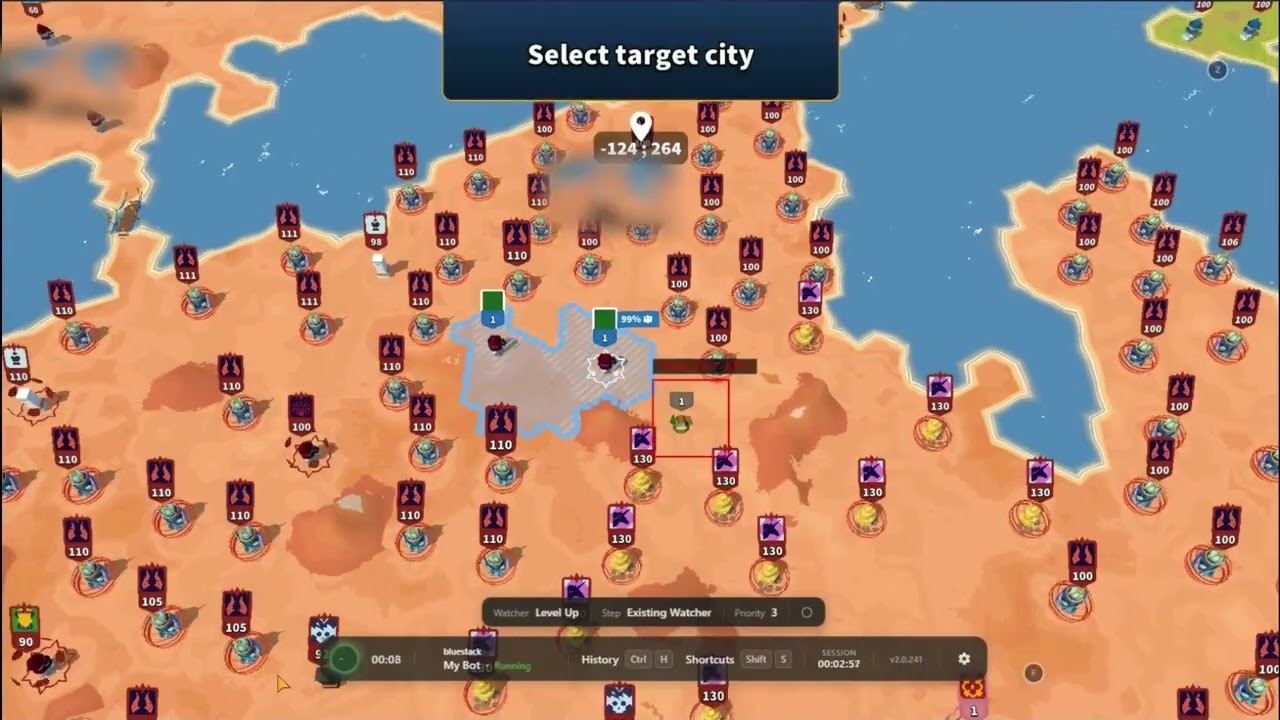
Legal AI game bots 2026
The legal landscape for AI game bots in 2026 is defined by a strict binary: single-player assistance is generally permissible, while multiplayer automation is a breach of contract. Understanding this distinction is critical for protecting your accounts and avoiding permanent bans.
In single-player environments, AI tools act as assistants. They help with resource management, inventory sorting, or complex puzzle solving. These tools operate within the user's local machine or under the explicit permission of the game developer. Because they do not interact with other human players, they rarely violate Terms of Service (ToS). Developers often welcome these tools as they extend the lifespan of their games and improve player retention.
Multiplayer botting, however, crosses a legal and contractual line. When an AI bot interacts with other humans in real-time, it violates the core agreement of fair play. Game developers treat this as cheating, regardless of whether the bot is a simple macro or an advanced neural network. The legal risk here is not criminal liability but immediate and irreversible account termination.
Developers use sophisticated detection systems to identify non-human behavior. These systems analyze input patterns, reaction times, and decision-making consistency. An AI bot that plays with perfect precision is easily flagged. Once detected, the account is banned, and any in-game assets or purchases are lost. This is a high-stakes environment where the cost of automation far outweighs the benefit.
The rise of agentic AI in 2026 makes detection harder, but also more necessary. Developers are updating their ToS to explicitly cover AI-generated behavior. If you are using AI tools, ensure they are confined to single-player modes or have explicit developer approval. Never assume that anonymity protects you from detection.
Top MMO automation tools
The landscape of MMO automation has shifted from simple macro recorders to AI-assisted systems capable of adaptive decision-making. For players seeking to streamline repetitive tasks or manage multiple characters, selecting a tool that balances efficiency with platform compliance is essential. The following recommendations focus on established solutions that offer macro-based or AI-enhanced features, adhering to the legal and regulatory standards governing game software.
Stracti: No-Code AI Bot Builder
Stracti represents a significant development in accessible game bot creation. As a no-code platform, it allows users to build powerful AI game bots without writing a single line of code. This lowers the barrier to entry for players who want to automate complex strategies in MMOs without needing a programming background. The tool focuses on visual logic building, enabling users to define behaviors and triggers through an intuitive interface.
AutoHotkey: The Macro Standard
AutoHotkey (AHK) remains the industry standard for manual macro automation. While not an "AI" tool in the modern sense, its scripting flexibility allows for the creation of highly customized automation routines. Users can script key presses, mouse movements, and timing sequences to handle repetitive MMO tasks like resource gathering or crafting. Its open-source nature and extensive community support make it a reliable choice for players who prefer full control over their automation scripts.
BotLabs: Managed Bot Services
BotLabs offers a managed service model for players who prefer not to handle the technical setup of automation tools. This platform provides pre-configured bots for popular MMO titles, handling the hosting and maintenance aspects. Users can deploy bots to perform specific tasks such as leveling or farming, reducing the manual effort required. This service-oriented approach is ideal for players who prioritize convenience and reliability over custom script development.



As an Amazon Associate, we may earn from qualifying purchases.
When evaluating these tools, consider the specific requirements of your target MMO. Some games have strict anti-cheat measures that may detect or ban accounts using certain automation techniques. Always review the game's Terms of Service to ensure compliance. Additionally, hardware such as programmable mice and mechanical keyboards can enhance the effectiveness of macro-based automation, providing the physical interface needed for precise input sequences.
Strategy game AI assistants
Strategy games require complex decision-making that exceeds manual human capacity in real-time. AI assistants address this by providing automated analysis and decision support. These tools function as computational co-pilots, processing game state data to suggest optimal moves without directly controlling the unit. This distinction is critical for maintaining competitive integrity in multiplayer environments.
The regulatory landscape for AI in gaming is tightening. The US Copyright Office’s March 2025 guidance confirms that works must “ultimately be the product of human authorship” to qualify for protection. Similarly, competitive gaming platforms enforce strict rules against botting. Assistants must operate within these boundaries, offering insights rather than autonomous execution.
The following comparison outlines leading strategy game AI assistants. These tools range from post-game analysis engines to real-time tactical advisors. Each entry represents a distinct approach to integrating artificial intelligence into strategic planning.
| Tool Name | Assistant Type | Primary Function | Compliance Level |
|---|---|---|---|
| AlphaStar (DeepMind) | Research Framework | Strategic analysis and move evaluation | Offline/Research Use Only |
| OpenAI Five | Multi-Agent System | Dota 2 team coordination and macro-strategy | Closed Demo Environments |
| Modl.ai | Development Assistant | AI asset generation and NPC behavior design | Developer Tooling |
| Chess.com AI | Training Partner | Move suggestion and pattern recognition | Single-Player/Training |
Detection Risks and Account Safety
Game developers in 2026 have moved beyond simple input timing checks. Modern anti-cheat systems analyze behavioral patterns, mouse movement entropy, and decision-making latency to identify AI-driven automation. When a bot plays, it often exhibits a level of mechanical perfection or predictable repetition that human players cannot sustain. Detecting these anomalies allows developers to flag accounts for review or immediate suspension.
The risk extends beyond losing your current account. Many platforms employ hardware IDs and IP tracking to prevent banned users from creating new accounts. If your automation tool is detected, the ban may be permanent and tied to your device or network identity. This makes the choice of bot software a critical compliance decision, not just a performance one.
To minimize detection risk, prioritize tools that mimic human imperfection. Look for features that introduce random delays, slight mouse variance, and adaptive response times. Avoid bots that execute actions with zero latency or rigid, loop-based patterns. Always review the game’s Terms of Service, as using unauthorized automation is a breach of contract that voids your license to play.
No comments yet. Be the first to share your thoughts!