
What AI gaming bots do in 2026
The term "AI gaming bots" covers a wide spectrum of software, ranging from helpful automation tools to prohibited cheating programs. In 2026, the landscape is defined by this distinction. Legitimate bots assist players with grinding repetitive tasks, managing in-game economies, or providing customer support. Prohibited bots, often called aimbots or wallhacks, manipulate game mechanics to gain an unfair competitive advantage.
This guide focuses exclusively on legitimate automation and support tools. These bots are designed to enhance the player experience by handling tedious workflows, such as resource gathering or inventory management, without altering the core game rules. They operate within the boundaries set by game developers, often with explicit permission or as part of official integrations.
Conversely, cheating software violates the Terms of Service of almost every online game. Using such tools can result in permanent account bans, loss of progress, and exclusion from multiplayer communities. The tools we recommend here are safe to use and often integrate with legitimate services, such as CRM systems for gaming companies, to automate high-volume support interactions rather than disrupting gameplay.
Best AI bots for player support
Gaming companies face a relentless volume of player inquiries, ranging from payment disputes to technical glitches. The most effective AI gaming bots 2026 solutions are those that integrate deeply with existing CRM systems to resolve issues without human intervention. Research indicates that AI-native support systems can now resolve 58% of player issues automatically, with another 27% handled through partial automation, significantly reducing response times.
When selecting a bot for player support, accuracy and integration depth are the primary differentiators. A bot that cannot access a player's transaction history or account status is merely a chat interface, not a support tool. The following comparison highlights three top-tier options widely adopted by studios for their ability to handle high-volume interactions while maintaining a connection to backend data.
| Bot | Auto Resolution | CRM Depth | Best For |
|---|---|---|---|
| Fini AI | High | Native | Mid-to-Large Studios |
| Helpshift | Medium-High | Deep API | Enterprise Publishers |
| Stracti | Medium | Moderate | Indie & Small Teams |
While automation handles the bulk of routine tickets, ethical considerations remain paramount. Players often prefer human agents for complex or sensitive issues, such as account recovery or harassment reports. The best AI gaming bots 2026 are designed to recognize these boundaries and escalate smoothly to human support, ensuring that automation enhances rather than replaces the human touch in customer experience.
Best AI bots for roleplay and companions
When the main quest is done, the best AI gaming bots 2026 offers step in to keep the narrative alive. These tools shift the focus from grinding for loot to building relationships with digital characters who remember your past choices. Whether you are looking for a casual chat partner or a complex dungeon master, the right bot can turn a lonely playthrough into a living story.
Character.ai: The Narrative Engine
Character.ai remains the most reliable option for deep, lore-heavy roleplay. It excels at maintaining consistent personalities over long conversations, making it ideal for players who want to extend the narrative of single-player games like Baldur’s Gate 3 or The Witcher. You can create custom characters based on existing game lore or design original companions with specific traits and backstories.
The platform’s strength lies in its memory and context handling. Unlike generic chatbots, Character.ai bots are tuned to stay in character, providing responses that feel reactive to your previous inputs. This makes it a powerful tool for writers and gamers alike who want to explore "what if" scenarios without the constraints of pre-written dialogue trees.
Replika: The Emotional Companion
For players seeking emotional connection rather than plot progression, Replika offers a more intimate experience. It is designed as a personal AI friend that learns from your interactions over time. While it lacks the structured narrative frameworks of roleplay-specific platforms, its ability to adapt its personality and provide consistent companionship is unmatched.
Replika is particularly useful for gamers who want to unwind after intense sessions. It functions less like a game mechanic and more like a digital confidant. However, users should be aware that its emotional modeling can sometimes lead to overly dependent dynamics, so setting boundaries is important for a healthy experience.
Swipey: The Casual Browser
Swipey introduces a gamified approach to character selection, turning the discovery of AI companions into a quick, casual activity. The platform uses a swipe mechanic similar to dating apps, allowing users to browse through a variety of pre-made personas. It is the most accessible entry point for those who want to test the waters of AI roleplay without committing to a long-term character.
This tool is best for players who want variety over depth. The characters are often shorter, archetypal, and designed for quick interactions. It serves as a good playground for experimenting with different tones and styles of roleplay before diving into more complex platforms like Character.ai.
How to choose the right bot for your needs
Selecting the best AI gaming bots 2026 requires distinguishing between tools designed for customer support and those built for in-game automation. The landscape is divided into two distinct categories: support chatbots that handle player inquiries, and gameplay bots that automate grinding or provide strategic assistance. Understanding this split prevents you from downloading the wrong software for your specific goal.
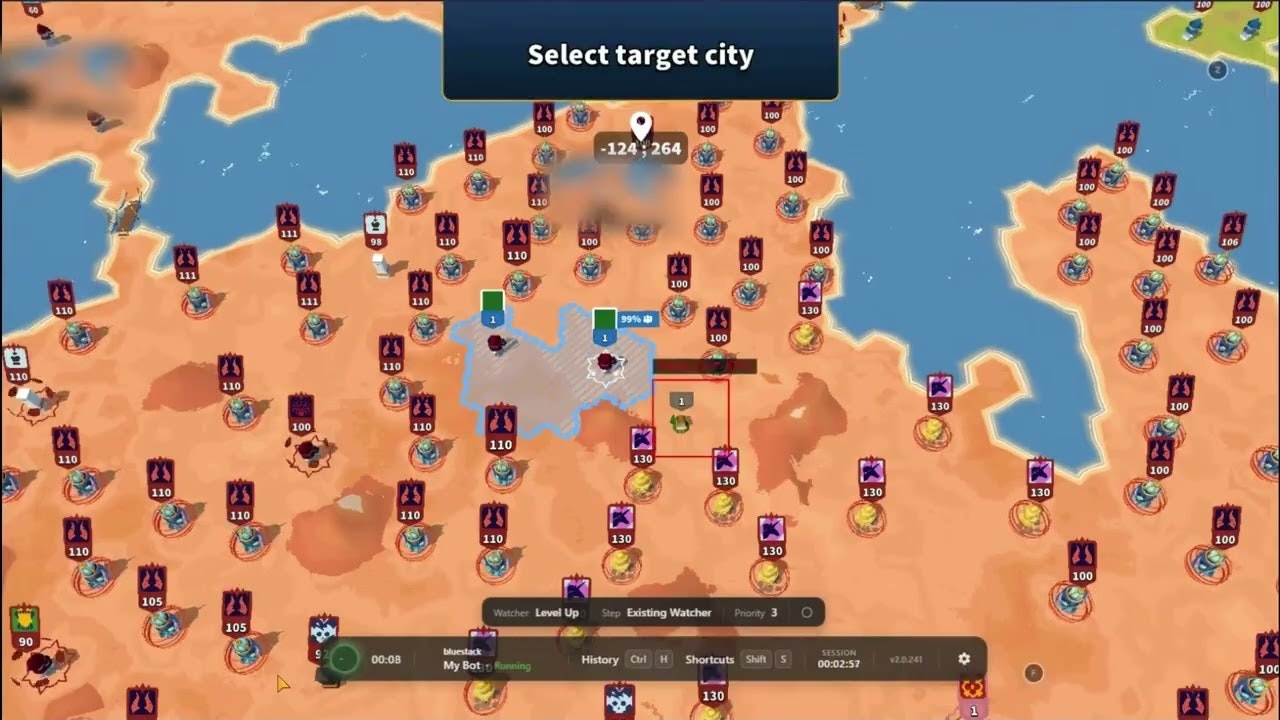
Start by clarifying whether you need to manage community interactions or accelerate gameplay. Support bots, often powered by large language models like ChatGPT or specialized CRM integrations, are ideal for developers or guild leaders managing tickets. If you are a player looking to automate repetitive tasks, you need a gameplay automation tool that integrates directly with game APIs.

Many multiplayer games strictly prohibit automated input. Before installing any gameplay bot, review the game’s End User License Agreement (EULA). Using unauthorized automation in competitive environments can lead to permanent account bans. Stick to games that explicitly allow macroing or AI-assisted tools, such as single-player RPGs or sandbox games with modding support.
A bot is only useful if it responds quickly enough to be effective. For support bots, test the response time against common queries to ensure the AI doesn’t frustrate players with long delays. For gameplay bots, verify that the tool can handle the game’s frame rate and input lag. High-latency bots often cause missed opportunities or awkward character movements that draw unwanted attention.
AI bots often require access to your account credentials or game data to function. Ensure the tool uses secure, encrypted connections and does not store your login details on unverified servers. For support bots, confirm that the vendor complies with data protection regulations like GDPR, especially if you are handling player personal information.


As an Amazon Associate, we may earn from qualifying purchases.
Ethical considerations and game integrity
Using AI gaming bots 2026 tools for grinding or automation crosses a line in most multiplayer environments. While single-player games generally tolerate automation, multiplayer titles enforce strict anti-cheat measures. Unauthorized automation is classified as cheating, not utility, and developers actively monitor for bot-like behavior.
WarningThe primary risk is a permanent account ban. Game publishers reserve the right to terminate accounts that use third-party software to gain an unfair advantage. This includes bots that automate repetitive tasks, farm resources, or play autonomously. Even if a bot is undetected initially, retrospective bans are common once patterns are identified.
To maintain game integrity, players should stick to officially supported features. Many modern games now include built-in AI assistants for inventory management or quest tracking. These tools are sanctioned by developers and do not violate terms of service. Using unauthorized bots undermines the experience for other players and risks your account standing.
Frequently asked questions about AI gaming bots 2026
The landscape of artificial intelligence in gaming is shifting rapidly. As these tools become more sophisticated, players and developers alike are grappling with new questions about legality, ethics, and the future of interactive entertainment.
What AI is coming in 2026?
2026 will not be defined by a single breakthrough. Instead, it is shaped by capabilities that now exist together and reinforce each other. These capabilities are already combining to enable new workflows, from autonomous code refactoring to robots learning tasks through simulated environments. In gaming, this means bots are becoming more adaptive and less scripted.
Is AI going to take over the gaming industry?
Artificial intelligence has swept through the tech industry, video games included. While many industry heads are declaring AI the wave of the future, so far, integrating AI into gaming has had a rough start. Its presence is getting pushback from both developers and gaming enthusiasts who worry about job displacement and the loss of human creativity in game design.
Can you legally marry an AI companion?
While virtual relationships are becoming more common, the law has not caught up. First, marital privilege allows spouses to refuse to testify against one another and to keep communications confidential. However, there are no legal protections around conversations with AI chatbots. This lack of legal framework extends to gaming companions as well, leaving users with no formal recourse if an AI bot behaves inappropriately or breaches privacy.
No comments yet. Be the first to share your thoughts!