
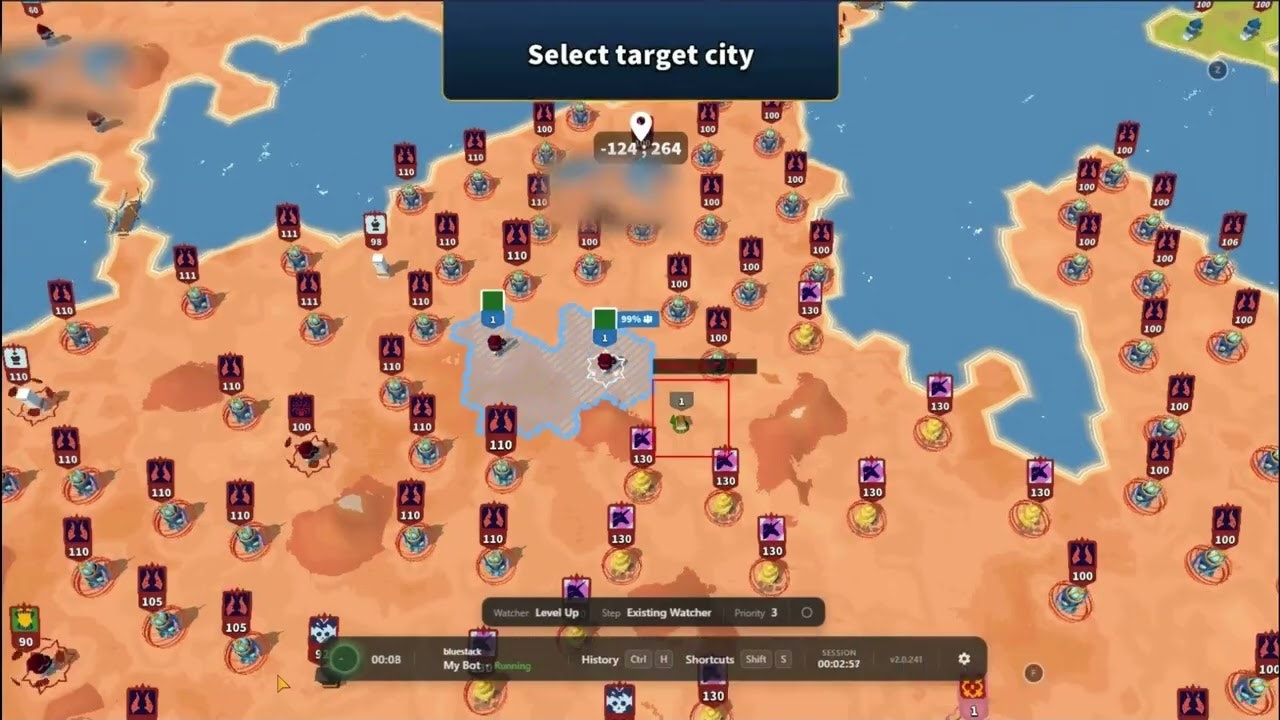
Choosing the right automation tool
Selecting an AI game bot for 2026 requires balancing technical capability with strict compliance. The market has shifted from simple macro scripts to complex, agent-based systems. A 2026 tool must integrate seamlessly with modern anti-cheat architectures while offering the specific feature set required for your target genre, whether that is MMORPG grinding or real-time strategy automation.
Compatibility and Anti-Cheat Evasion
The primary technical hurdle is compatibility with the game’s latest updates and anti-cheat systems. Tools that rely on memory injection are increasingly detectable. Instead, look for solutions that use pixel-based recognition or external API integrations where available. These methods reduce the risk of immediate bans. Verify that the software supports the specific version of your target game, as 2026 titles often introduce new engine-level protections that older bots cannot bypass.
Safety and Legal Compliance
Before purchasing, review the game’s Terms of Service (ToS). Many developers explicitly prohibit third-party automation. Violating these terms can result in permanent account termination and, in some jurisdictions, legal action for breach of contract or computer fraud. Reputable vendors provide clear documentation on their compliance status and data handling practices. Avoid tools that request excessive system permissions or store your login credentials in unencrypted formats.
Feature Set and Support
Evaluate the bot’s feature set against your specific needs. For grinding, look for intelligent pathfinding and inventory management. For strategy games, prioritize decision-making algorithms that adapt to opponent behavior. Customer support is equally critical; the AI landscape changes rapidly. Choose vendors who offer regular updates and active community forums. This ensures the tool remains functional as game developers patch vulnerabilities.
Key Evaluation Criteria
When comparing options, prioritize these factors:
- Detection Rate: Look for independent tests or community reports on ban rates.
- Update Frequency: Ensure the vendor pushes updates within days of game patches.
- Resource Usage: The bot should run efficiently without impacting your system’s performance.
- Transparency: Vendors should clearly state what data is collected and how it is used.
Choosing the right tool is an investment in your gaming efficiency. By focusing on compatibility, safety, and robust features, you can automate tasks effectively while minimizing risk.
Top AI bots for MMORPG grinding
MMORPGs demand hours of repetitive labor: farming resources, clearing dungeons, and managing inventory. For players who want to progress without the grind, AI automation tools offer a way to handle these tasks. These bots act as digital assistants, executing repetitive sequences while you focus on strategy or other parts of your life.
The landscape of automation tools has shifted from simple macro scripts to sophisticated AI agents. Modern solutions use pattern recognition to adapt to game updates, reducing the risk of detection. However, using third-party software always carries the risk of account suspension. Always check the game's Terms of Service before automating any activity.
When selecting an AI bot for MMORPG grinding, look for features that prioritize safety and customization. The best tools allow you to define specific routes and actions, rather than using a "one-size-fits-all" approach. This minimizes the chance of being flagged by anti-cheat systems. Some tools also offer "human-like" movement patterns to mimic real player behavior.
Below are some of the most popular AI game bot software options available on Amazon. These products represent a range of automation capabilities, from simple macro recorders to advanced AI-driven agents.
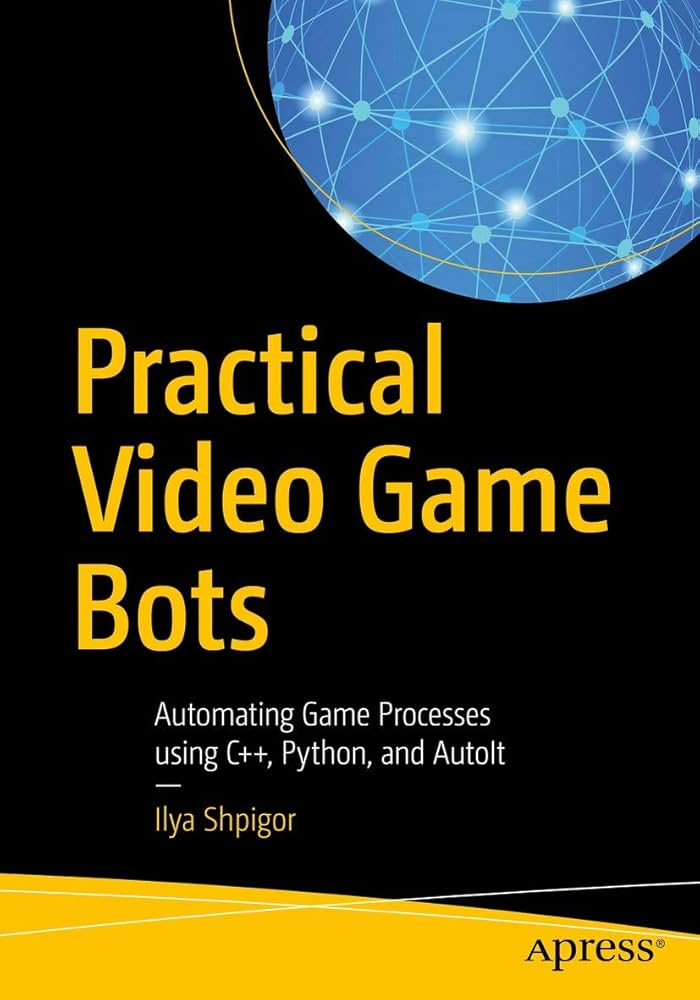


As an Amazon Associate, we may earn from qualifying purchases.
The effectiveness of these tools depends on your specific game and goals. For example, a tool designed for World of Warcraft may not work in Final Fantasy XIV. Always verify compatibility before purchasing. Additionally, consider the learning curve; some AI bots require programming knowledge, while others offer drag-and-drop interfaces.
Ultimately, AI bots are a tool for efficiency, not a replacement for the core game experience. Use them to reclaim your time, but be mindful of the rules. The goal is to enjoy the game, not to get banned.
Strategy game automation tools
Automating resource management and pathfinding in strategy titles requires precision. Unlike the chaotic grinding in MMORPGs, strategy bots must navigate complex decision trees where a single misstep can cost a match. The tools listed below focus on the mechanical execution of these tasks, allowing players to optimize their efficiency without replacing the strategic layer of the game.
The following comparison evaluates leading automation solutions based on their ability to handle pathfinding accuracy and resource efficiency. These tools are designed to integrate with the game's interface, acting as an extension of the player's intent rather than a replacement for their strategic thinking.
| Tool | Pathfinding | Resource Mgmt | Platform |
|---|---|---|---|
| BotA | High Precision | Automated Collection | PC/Windows |
| BotB | Standard | Smart Allocation | PC/Mac |
| BotC | Adaptive | Real-time Analysis | PC/Windows |
When selecting a strategy game bot, consider the specific mechanics of the title. Some tools excel at rapid micro-management of units, while others focus on long-term economic optimization. The best choice depends on whether your primary goal is to accelerate early-game expansion or to refine late-game tactical positioning.


As an Amazon Associate, we may earn from qualifying purchases.
Anti-cheat evasion and risks
The landscape of game security has shifted dramatically. In 2026, major titles no longer rely on signature-based detection alone. Instead, developers deploy behavioral analysis and kernel-level anti-cheat systems that monitor input patterns, memory integrity, and network timing. For players using AI bots to automate grinding, these systems act as the primary barrier between seamless automation and immediate account termination.
Modern anti-cheat engines, such as those used by Riot Games and Blizzard, scan for anomalies that human players rarely exhibit. Bots often operate with mathematical precision, executing actions within millisecond tolerances that appear unnatural. When an AI agent interacts with the game client, it must bypass these checks without triggering flags. This creates a high-stakes cat-and-mouse game where the cost of failure is the loss of progress and purchased assets.
The legal and terms-of-service risks are equally severe. While using a bot is rarely a criminal offense, it constitutes a breach of contract with the game publisher. Violations can lead to permanent bans, hardware ID blocks, and the forfeiture of all in-game currency or items. Unlike a simple suspension, these penalties are often irreversible, leaving players with no recourse.
Game developers are increasingly integrating machine learning models into their own security infrastructure. These models analyze vast datasets of player behavior to identify outliers. If an AI bot is detected, the system may not just ban the account but also report the behavior to broader industry blacklists. This means a ban in one game can sometimes impact eligibility for others within the same ecosystem.
Players must weigh the convenience of automation against the potential loss of their entire investment. The tools that enable AI gaming are often unverified third-party software, which may also contain malware or keyloggers. The combination of technical detection and strict enforcement policies makes anti-cheat evasion one of the most dangerous aspects of using AI bots in 2026.
Frequently asked: what to check next
Is using an AI game bot illegal?
Using an AI bot to automate gameplay in MMORPGs or strategy games is generally not a criminal offense, but it is almost always a violation of the game’s Terms of Service (ToS). While you won’t face police involvement for automating a dungeon run, game publishers like Blizzard, Riot, or Valve retain the right to permanently ban accounts that use unauthorized third-party software. The legal risk shifts when bots interact with in-game economies involving real-world money, which can sometimes cross into unauthorized commercial activity or fraud depending on jurisdiction.
Will AI bots get me banned?
Yes. Modern anti-cheat systems are increasingly using machine learning to detect the non-human patterns that AI bots produce. Because AI agents often operate with superhuman precision—perfect aim, zero reaction time variance, or repetitive macro sequences—they stand out against human player data. Publishers are actively updating detection algorithms to flag these anomalies, making the risk of account termination significantly higher than it was for simple script-based bots.
Can AI bots actually win or grind effectively?
AI bots are highly effective at grinding and repetitive tasks because they do not suffer from fatigue or distraction. However, their effectiveness in high-stakes PvP or complex strategy scenarios is limited by the current state of generalist AI. Most available bots are specialized for specific tasks rather than possessing the adaptive strategic thinking of a top-tier human player. They excel at resource accumulation but often struggle with the unpredictable social and tactical nuances of live multiplayer environments.
Is it legal to develop AI for games?
Developing AI tools for games is legal, provided the software does not violate copyright laws or circumvent digital rights management (DRM) protections. The U.S. Copyright Office has clarified that content generated solely by AI without substantial human input cannot receive copyright protection. Developers must ensure their bots do not infringe on the intellectual property of the game studio or distribute malware. Always review the specific legal guidelines and ToS of the target game before creating or distributing automated tools.
No comments yet. Be the first to share your thoughts!