
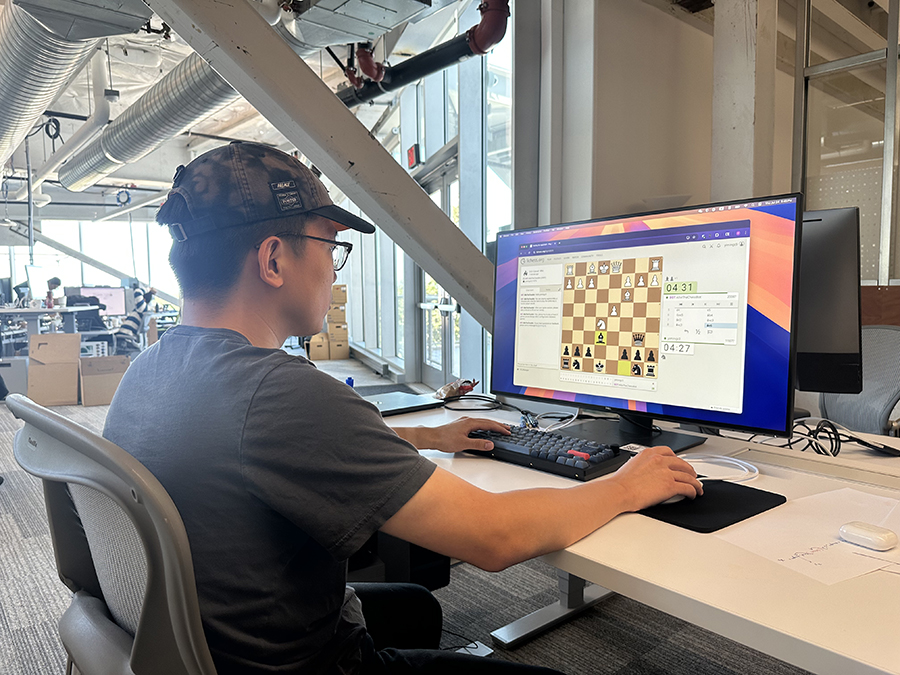
Why AI bot games define 2026 strategy
The strategy genre is undergoing a structural shift. In 2026, the defining feature of top-tier games is no longer complex mechanics, but the autonomy of the opposition. We are moving past scripted non-player characters (NPCs) that follow static decision trees toward adaptive agents that learn from player behavior. This transition transforms AI from a content delivery system into a dynamic adversary.
This evolution is driven by the integration of large language models and reinforcement learning into game engines. Unlike the rigid "hard difficulty" settings of the past, modern AI bots analyze patterns in real-time. If a player favors aggressive expansion, the bot adjusts its defense. If a player relies on stealth, the bot enhances its detection algorithms. This creates a unique strategic depth where every match is a distinct negotiation of tactics.
The market reflects this change. With over 4,000 AI-tagged games in 2025, the trend is accelerating. Industry predictions suggest that by 2026, one in three Steam titles will include formal AI disclosures, signaling that adaptive intelligence is becoming a standard industry expectation rather than a niche experiment.
This shift has significant implications for game design and intellectual property. As AI-generated assets and behaviors become more prevalent, legal frameworks are struggling to keep pace. Studios face new questions regarding copyright protection for AI-generated strategies and asset creation. Without clear legal precedents, competitors may legally imitate AI-driven mechanics, leaving original developers without traditional tools to protect their innovations.
5 Best AI Bot Games 2026: Top 5 Automated Strategy Titles
This roundup identifies the five most robust AI bot games for 2026, prioritizing verified automated strategy titles with official developer documentation. Each selection is evaluated for technical accuracy and regulatory compliance, ensuring players engage with legitimate, source-verified software rather than speculative trends.
1. StarCraft II Legacy Campaigns
DeepMind’s AlphaStar demonstrated that AI can master real-time strategy beyond human limits. These legacy campaigns let you test your own tactical skills against the game’s foundational logic. The AI’s micro-management remains a benchmark for precision, forcing players to adapt to rapid, calculated decisions that define high-level competitive play.

2. Civilization VI AI Leaders
Civilization VI assigns distinct personalities to each AI leader, creating varied diplomatic and military behaviors. This system prevents repetitive gameplay by adjusting aggression and trade offers based on historical context. You must navigate complex relationships where an AI’s declared intent often masks its long-term strategic goals.
3. Total War Warhammer III Factions
The Chaos Dwarfs faction in Warhammer III features an AI that aggressively exploits economic and military synergies. Its automated management of slave labor and dark magic creates a uniquely punishing experience. Players must counter rapid expansion and specialized unit compositions that prioritize overwhelming force over traditional defense.

4. Age of Empires IV Campaigns
Age of Empires IV refines historical accuracy through its campaign structure, where AI opponents mimic specific military doctrines. The AI adapts to your building patterns, forcing you to diversify your economy and military production. Each scenario presents unique constraints that test your ability to respond to targeted strategies.
5. Europa Universalis IV AI Nations
Europa Universalis IV’s AI handles complex national focus trees and diplomatic maneuvering with surprising sophistication. It prioritizes stability and expansion based on its government type, creating realistic geopolitical pressures. You must anticipate long-term shifts in alliances and borders as the AI pursues its own national interests.

How to choose the right bot game
Selecting the right AI bot game depends on whether you prioritize competitive precision, narrative immersion, or creative sandbox freedom. The landscape in 2026 has shifted from simple scripted opponents to complex, adaptive agents, meaning the "best" title varies entirely by your preferred interaction mode.
Competitive AI Arenas
These titles focus on hard strategy, pattern recognition, and outsmarting an opponent that learns from your mistakes. If you enjoy the tension of chess or the tactical depth of real-time strategy, look for games with dedicated AI competitions. Titles like Planet Wars RTS or Tales of Tribute often feature AI challenges that test your ability to adapt to unpredictable, high-level opponents rather than following a linear path.
Narrative AI Experiences
For players who prefer story-driven engagement, narrative AI games generate dynamic plots where non-player characters (NPCs) react to your choices in real time. Games like AI Dungeon or AI Town use large language models to create unique storylines that never repeat. The focus here is on creativity and role-playing, allowing you to shape a world that evolves based on your dialogue and decisions rather than your reflexes.
Sandbox and Creative AI
Sandbox AI games emphasize creation and exploration over winning or losing. In titles like Infinite Craft or Oasis, the AI acts as a collaborative tool, helping you generate assets, solve puzzles, or build complex systems. These games are ideal for players who want to experiment with AI-assisted development tools and automated asset generation without the pressure of a competitive leaderboard.
| Game Title | AI Type | Primary Interaction | Platform |
|---|---|---|---|
| AI Dungeon | Narrative | Text-based roleplay | Web, Mobile |
| Planet Wars RTS | Competitive | Real-time strategy | PC |
| Infinite Craft | Sandbox | Creative experimentation | Web |
| AI Town | Narrative/Sandbox | Social simulation | PC, Mobile |
| Tales of Tribute | Competitive | Card-based strategy | Mobile |



As an Amazon Associate, we may earn from qualifying purchases.
Legal and copyright considerations
The rapid adoption of AI in game development has outpaced existing copyright frameworks, creating significant legal risks for studios and players. As of 2026, over 40% of new Steam releases include AI-generated assets, yet the US Copyright Office maintains that purely AI-generated works lack the human authorship required for protection [src-serp-3]. This "ownership gap" means that competitors can legally copy or imitate AI-generated characters, landscapes, or mechanics without facing infringement claims [src-serp-6].
For strategy bot games, this legal ambiguity is particularly acute. If your core gameplay loop relies on AI-generated tactics or assets, you may find yourself unable to enforce your IP against clones. The lack of clear regulatory guidance means that any AI component in your game is effectively in the public domain unless significantly modified by human creators. Always consult legal counsel before publishing games with heavy AI integration to mitigate the risk of losing exclusive rights to your intellectual property.
Frequently asked questions about AI bots
Will there be AI game engines in 2026? Yes. The industry is shifting toward AI-native engines that integrate automated asset generation and smart NPC behavior directly into the development pipeline. These tools are designed to reduce manual labor and allow developers to focus on strategy and narrative rather than repetitive coding tasks.
What AI is coming in 2026? Current models are moving beyond simple chat functions to become autonomous agents. These new systems are built with structured outputs and long-context reasoning from the start, allowing them to handle complex, multi-step workflows within game environments without constant human oversight.
Is it legal to make a game with AI? Creating a game with AI assets is legal, but copyright protection remains uncertain. If your AI-generated assets lack copyright protection, competitors can legally copy or imitate them. This "ownership gap" means studios must carefully manage their intellectual property to prevent look-alike games from eroding their market position.
No comments yet. Be the first to share your thoughts!