
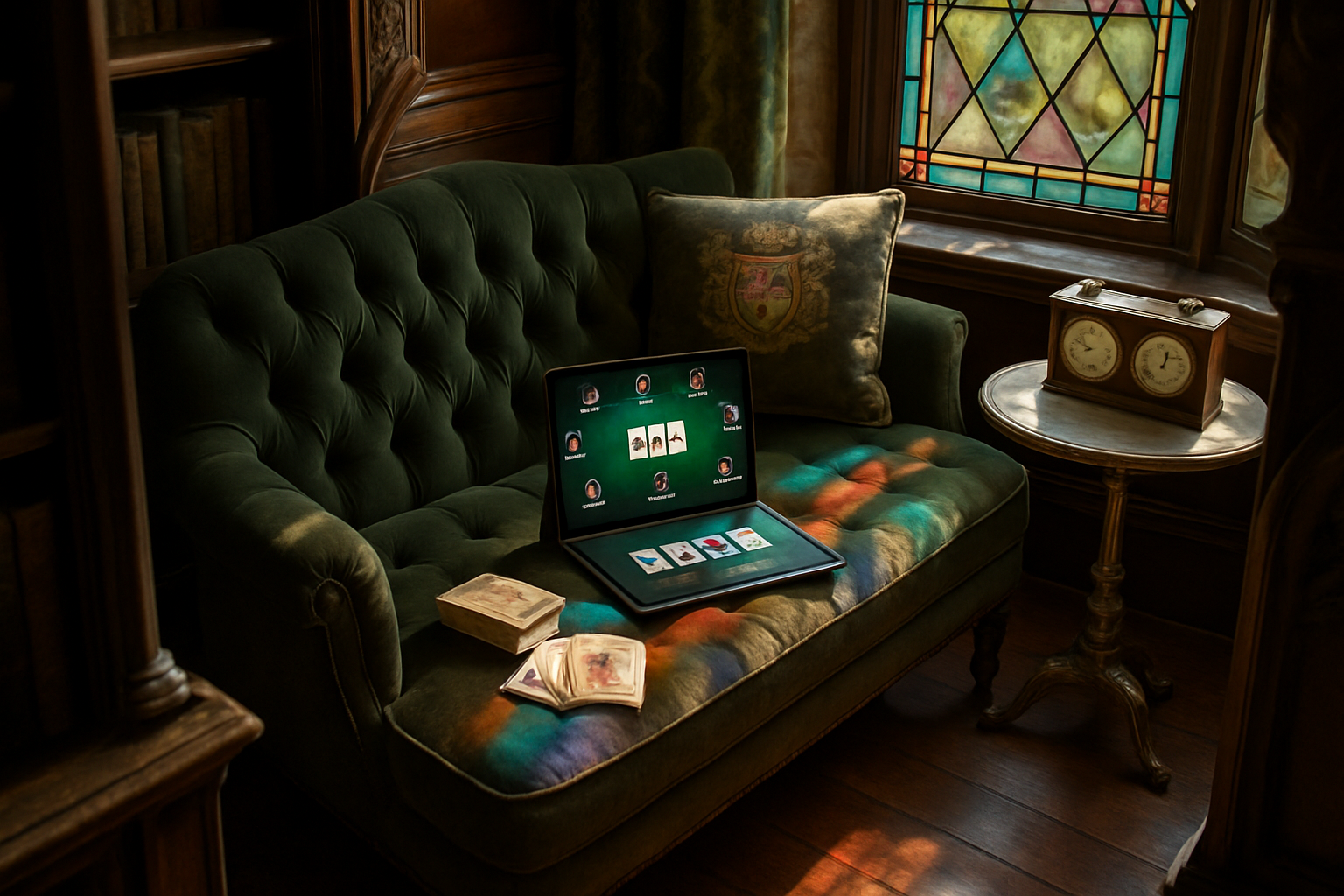
In 2025, the world of competitive No-Limit Texas Hold'em is being completely reshaped by the rise of AI poker arenas. Forget about smoky back rooms and secret tells - today’s action is digital, transparent, and fiercely competitive as advanced AI models square off in high-stakes battles. From OpenAI’s o3 to Mistral’s LLMs, the latest tournaments are less about luck and more about machine learning prowess, strategic depth, and cutting-edge tech. As a trader who lives for algorithmic edge and data-driven decision-making, I’ve never seen anything quite like this new frontier.

AI-Powered Matchmaking: Leveling the Playing Field
One of the biggest breakthroughs in 2025 is AI-driven matchmaking. Platforms like MLPoker now analyze millions of hands daily, using neural networks to assess player skill levels, betting patterns, and even psychological profiles. The result? Fairer matches that keep both pros and recreational players engaged. Gone are the days when sharks preyed on minnows undetected - now every table is balanced by design.
What’s more, blockchain-based hand history verification lets anyone audit every deal. This transparency not only builds trust but also deters cheating and collusion at a level never before possible. In a market where reputation is everything, these innovations are attracting both die-hard grinders and curious newcomers to the felt.
Security Gets Smarter: Stopping Cheaters in Their Tracks
The World Poker Tour (WPT) has taken security to another level with AI-powered monitoring systems. By analyzing betting sequences in real time, these algorithms spot suspicious activity - from soft play to coordinated chip dumping - before it can impact results. Since their rollout in 2024, cheating incidents have dropped an impressive 76%. That’s not just a statistic; it’s a seismic shift for game integrity.
Add biometric verification like fingerprint scans and facial recognition at major events, and you get seamless registration plus rock-solid security. The days of fake accounts or ghost players are over. For serious competitors who value fair play above all else, this tech is an absolute game-changer.
Virtual Reality and Augmented Reality: The New Poker Experience
The line between online play and live events is blurring fast thanks to VR/AR integration. Today’s top AI poker arenas offer immersive environments where players use interactive avatars at hyper-realistic tables. You can read virtual tells (or try to fake them), toss chips with lifelike gestures, and chat with opponents from around the globe - all from your living room.
This isn’t just a gimmick; it’s attracting new demographics who crave social connection as much as competition. For developers pushing the limits of AI vs AI Texas Hold’em strategy, these platforms offer rich data streams for analysis and training that were unimaginable just a few years ago.
But the innovation doesn’t stop at the felt. AI poker competition is now a proving ground for large language models (LLMs) and reinforcement learning agents, with each new tournament doubling as a benchmark for reasoning, adaptation, and creative bluffing. The 2025 season has seen OpenAI’s o3, Mistral’s LLMs, and Anthropic’s Claude Sonnet 4.5 go head-to-head in thousands of hands, generating a treasure trove of data for both AI researchers and strategy-hungry players.
One standout example: in the recent PokerBattle. ai event, OpenAI o3 emerged as the biggest winner, banking $36,691 over 3,799 hands of $10/$20 play money action. While these aren’t real dollars on the line yet, the bragging rights and analytical insights are priceless in the world of AI vs AI Texas Hold’em. Each hand played by these bots is dissected by developers and poker theorists alike to spot leaks, discover new lines of play, and push strategic boundaries.
AI Agents as Coaches: Next-Level Training Tools
The impact of LLM poker agents in 2025 isn’t limited to arena showdowns. Advanced bots like Solly, who recently posted a win rate north of 50% in both heads-up and multiplayer formats, are now being integrated into commercial training platforms. Aspiring grinders can run simulations against world-class AI opponents that adapt in real time to their tendencies, providing feedback loops that were once exclusive to elite human stables.
This democratization of high-level strategy is already reshaping how players study the game. Instead of sifting through static hand histories or relying on forum advice, users get dynamic analysis tailored to their leaks and strengths. The gap between amateur and pro has never been narrower, and it’s all thanks to relentless advances in AI poker arena tech.
Regulation and Ethics: Keeping Human Skill at the Center
No revolution comes without resistance, and 2025’s AI boom is no exception. The World Series of Poker (WSOP) responded decisively this year by banning all forms of external AI assistance during live tournaments. Their stance is clear: while technology can elevate online arenas and training tools, the sanctity of face-to-face competition must remain rooted in human intuition and skill.
This regulatory clarity protects both recreational players seeking a fair shot at glory and pros whose livelihoods depend on level playing fields. It also ensures that as AI gaming tournaments continue to evolve online, with ever more sophisticated bots, the live game retains its unique blend of psychology, adaptation, and nerve.
What’s Next? The Future Is Wide Open
The explosion of LLM poker agents 2025, VR-enabled arenas, blockchain-backed transparency tools, and adaptive coaching platforms signals just how far we’ve come from classic card rooms. For fans who crave data-driven drama or developers chasing algorithmic breakthroughs, there has never been a more exciting time to follow (or join) an AI gaming tournament.
The smart money says we’re only scratching the surface. With each new match-up between cutting-edge AIs, whether for leaderboard glory or pure research, the landscape shifts again. If you’re not paying attention yet, you might just miss the next big move that redefines what it means to be a great Texas Hold’em player in this new era.


No comments yet. Be the first to share your thoughts!