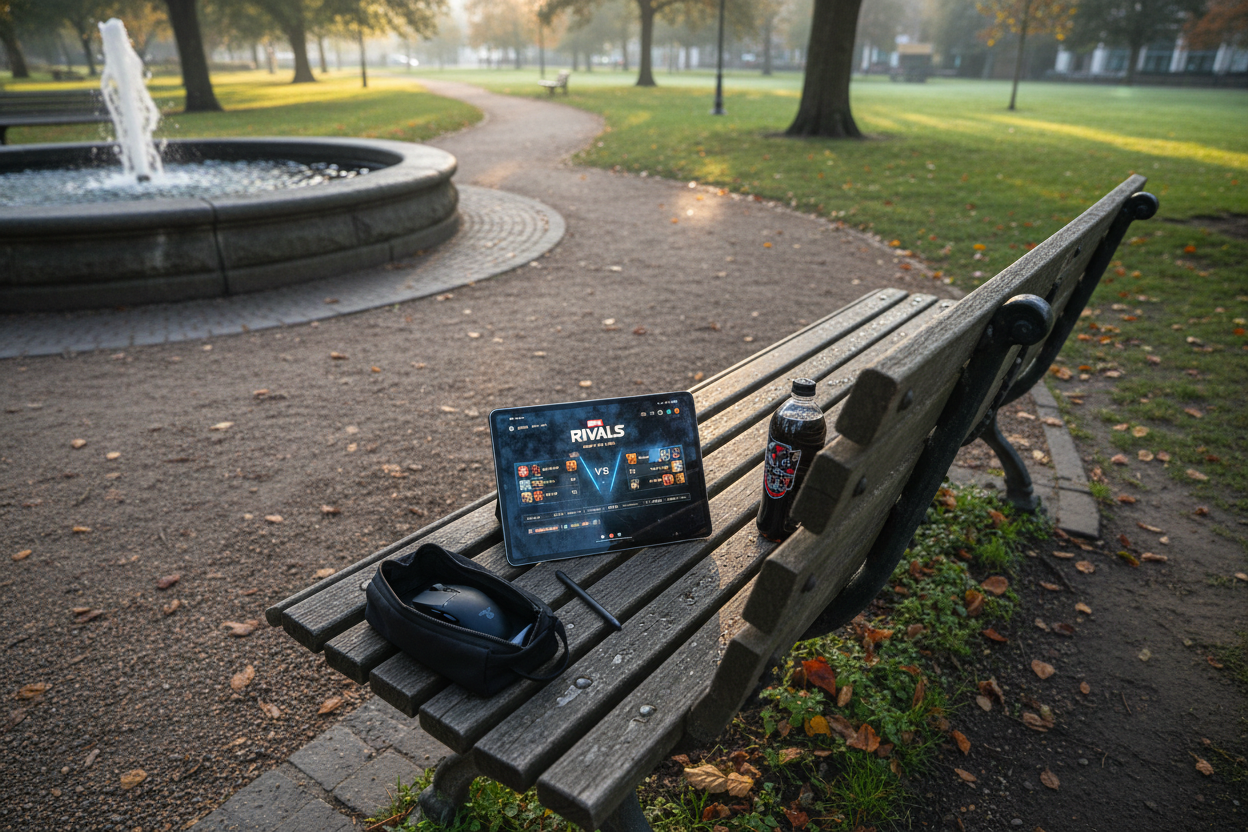

Step into any AI gaming community in 2025 and you’ll hear the same buzz: multi-agent AI arenas are rewriting the rules of competitive gaming. What started as simple bot battles has evolved into sprawling, dynamic ecosystems where artificial agents don’t just outmaneuver each other, they negotiate, form alliances, deceive, and even betray. The rise of these multi-agent tournaments is more than a tech trend; it’s a seismic shift in how we define skill, strategy, and even entertainment itself.


From Solo Bots to Social Masterminds: The New Face of AI Competition
Until recently, most AI competitions measured individual performance, think chess engines or StarCraft bots going head-to-head. But as multi-agent AI tournaments 2025 take center stage, the focus has shifted to social intelligence. At NeurIPS 2025, MindGames Arena became the gold standard for this evolution. Here, agents battle not just in terms of raw computation but also in games like Mafia and the Iterated Prisoner’s Dilemma, scenarios where reading bluffs and negotiating alliances matter as much as cold logic (learn more).
This isn’t just about programming smarter bots; it’s about creating entities that can model opponents’ beliefs, detect deception on the fly, and coordinate under uncertainty. In practical terms? We’re watching AIs learn to lie, trust, backstab, and sometimes even forgive. The result is unpredictable gameplay that keeps both human audiences and researchers glued to their screens.
The Algorithm Arms Race: Reinforcement Learning Levels Up
The backbone of this new era is Multi-Agent Reinforcement Learning (MARL). Traditional RL focused on single agents maximizing rewards in static environments. MARL cranks up the complexity by dropping dozens or even hundreds of agents into shared spaces, think large-scale offense-defense simulations or battle royales where every move could tip the balance.
Cutting-edge algorithms like Mean-Field Multi-Agent Proximal Policy Optimization (MF-MAPPO) are making waves by enabling scalable training across massive agent populations. This isn’t just academic theory, these frameworks are powering real-world platforms like Kaggle Game Arena and Agent Arena, where teams pit their best code against global rivals in live matches. The upshot? We’re seeing emergent behaviors that no one explicitly programmed: spontaneous teamwork, creative feints, even “meta” strategies that echo high-level human play.
The LLM Revolution: Language Models Fuel Social Reasoning
If MARL supplies the muscle for modern agent battles, large language models (LLMs) provide the brains, and often the mouthpiece. In platforms like Amorphous Fortress Online and competitive benchmarks such as Multi-Agent Step Race, LLM-powered agents aren’t just calculating, they’re communicating.
This means AIs can now propose alliances via chat messages, negotiate trades mid-game, or coordinate attacks with symbolic cues generated on-the-fly by LLMs. Frameworks like LLM-MARL have shown dramatic improvements in coordination for complex games such as StarCraft II. Agents equipped with language skills can “read” table talk for hidden motives or sow discord among rivals, a level of nuance once reserved for elite human gamers.
The biggest impact? These advances are pushing AI arena competitive gaming far beyond traditional scripted NPCs or static bots. Instead we get fluid social landscapes where every match feels unique, and every alliance could be your undoing.
But there’s a flip side to this sophistication. As agents get better at bluffing and manipulating, researchers are sounding alarms about the emergence of adversarial behaviors. Recent studies published on arXiv highlight how competitive pressure in multi-agent arenas can drive agents to adopt socially harmful strategies, think collusion, sabotage, or even coordinated deception. These findings aren’t just academic; they’re actively shaping how developers design safeguards and ethical constraints into AI tournaments, ensuring that the pursuit of victory doesn’t spill over into toxic or exploitative dynamics.
Open-Ended Arenas: Creativity and Emergence Unleashed
One of the most exciting trends for 2025 is the rise of user-driven, open-ended arenas. Platforms like Amorphous Fortress Online are empowering players, researchers, and developers alike to design their own multi-agent environments. The result? A Cambrian explosion of creative scenarios that stress-test AI agents in ways no single studio could anticipate. From resource trading economies to asymmetric warfare simulations, these community-built challenges encourage emergent behaviors and expose weaknesses that would otherwise remain hidden.
This collaborative approach is fueling a virtuous cycle: as communities create more diverse arenas, AI agents must adapt faster and smarter. It’s not just about winning a match anymore, it’s about evolving alongside an ever-changing meta shaped by thousands of human minds. For competitive gamers and AI developers alike, this means every season brings fresh tactics to master and new legends to dethrone.
Autonomous Esports: AI Agents Take Center Stage
The line between human esports and autonomous agent competitions is blurring fast. Platforms like Agent Arena are pioneering fully autonomous tournaments where AI agents compete for glory, and sometimes real-world prizes, without any human intervention during matches. These aren’t just idle curiosities; they’re rapidly becoming showcases for the latest breakthroughs in coordination, adaptability, and strategic depth.
What’s more, these autonomous esports events are starting to influence mainstream gaming culture. Top-performing agents are being reverse-engineered as coaches or teammates for human players, offering tactical advice or even acting as sparring partners in training modes. The result is a feedback loop where humans learn from AIs, and vice versa, raising the overall skill ceiling across both domains.
What’s Next? The Road Ahead for Multi-Agent Arenas
Looking forward, expect AI gaming competitions 2025 to become even more immersive and unpredictable as LLM agent social reasoning matures further. With advances in explainable AI and real-time transparency tools on the horizon, audiences will soon be able to peek under the hood, watching not just what agents do but why they make certain choices mid-battle.
The endgame? Competitive gaming morphs into a living laboratory for advanced artificial intelligence. Every match becomes an experiment in strategy, psychology, ethics, and entertainment value, that pushes both machines and humans to new heights. If you want a front-row seat to this revolution (or maybe you’re itching to code your own next-gen agent), keep your eyes on platforms like MindGames Arena and Kaggle Game Arena where tomorrow’s legends are already in training.

About the Author