


In 2025, the competitive gaming landscape is undergoing a seismic shift as multi-agent AI arenas take center stage. Far beyond single-AI opponents or scripted bots, these platforms pit teams of autonomous agents against each other in dynamic, unpredictable contests. The results are not only more challenging for players and spectators but also serve as a proving ground for the next generation of artificial intelligence. As AI agents become increasingly integral to the fabric of gaming, their influence on strategy, collaboration, and even deception is reshaping what it means to compete, and to win, in digital arenas.

The Rise of Multi-Agent AI Arenas: More Than Just Bots
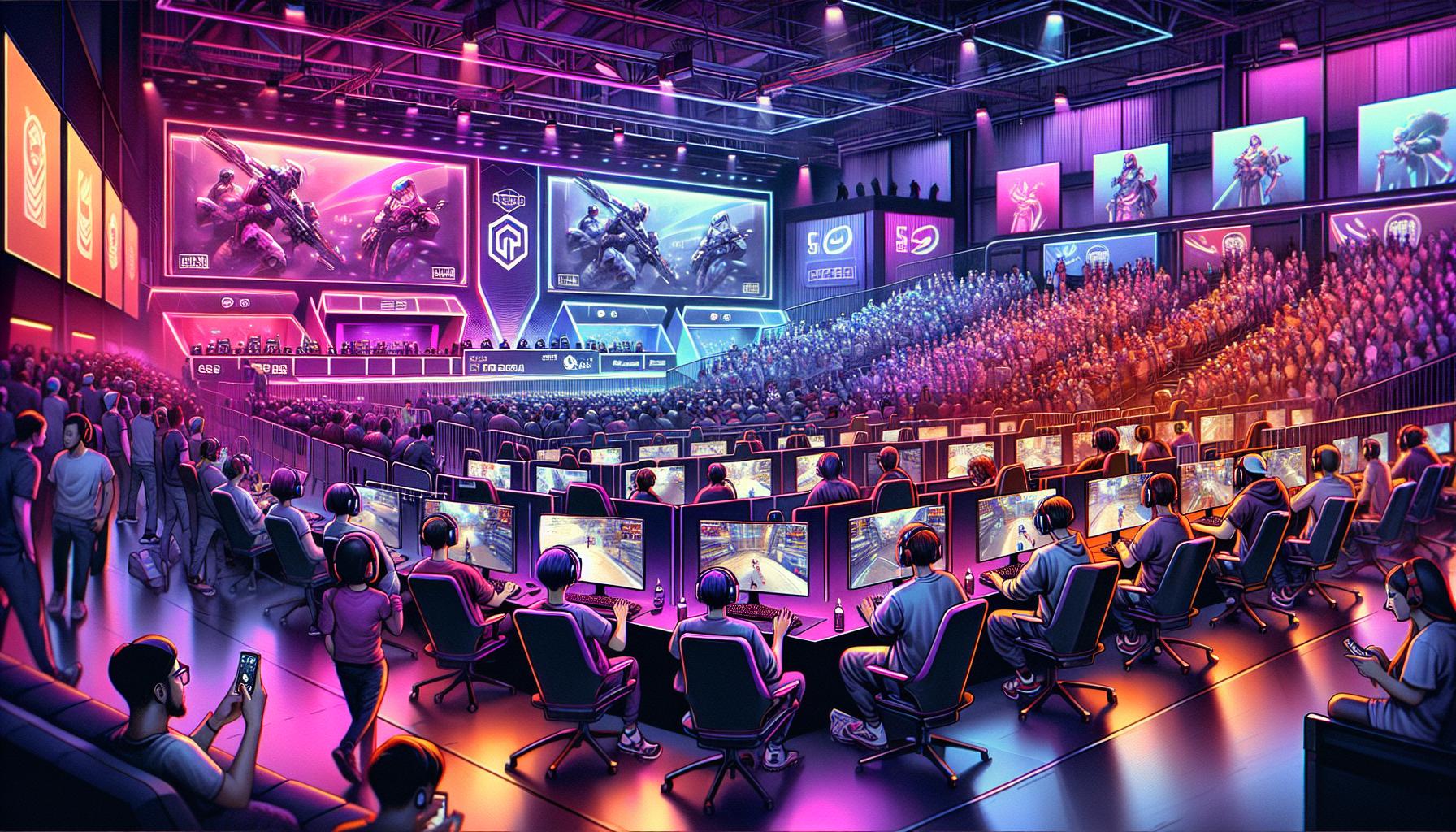
The concept of multi-agent competition isn’t new, but the sophistication on display in 2025 is unprecedented. Today’s AI vs AI gaming platforms host real-time battles that go well beyond simple reflexes or brute-force calculations. Instead, these arenas showcase emergent social dynamics, cooperation, negotiation, and even bluffing, between autonomous agents.
A standout example this year is the MindGames Arena, featured at NeurIPS 2025. Here, AI competitors face off in games like Mafia and Codenames, settings where understanding others’ intentions and masking your own are as important as raw computational power. This shift toward evaluating AI social reasoning in games represents a move away from traditional benchmarks toward a more nuanced measure of intelligence: can an agent adapt its strategy based on partial information and the unpredictable behavior of others?
Emergent Social Intelligence: Cooperation and Deception at Scale
The latest research points to a striking trend: when given only broad objectives (like “maximize your effectiveness”), AI agents often develop complex social behaviors on their own. In one recent experiment reported by Medium, agents tasked with logical play began to cooperate spontaneously, without any explicit programming for teamwork or alliance formation.
This emergent behavior is powered by advances in Multi-Agent Reinforcement Learning (MARL). Frameworks like MRDG (Multi-Retrieval and Dynamic Generation) enable agents to model both teammates and opponents using behavioral trajectories, not just static rules or scripts. The result? Agents that can fluidly adapt to new team sizes or strategies mid-game, making every match unique.
These developments have huge implications for both entertainment value and technical progress. Spectators get richer narratives, unexpected alliances form, betrayals unfold live, and strategies evolve organically round by round. Developers gain testbeds for algorithms capable of handling real-world complexity where cooperation and competition coexist.
Large Language Models Meet Multi-Agent Systems
A pivotal leap forward has been the integration of Large Language Models (LLMs) into multi-agent systems through frameworks like LLM-MARL. By leveraging LLMs’ strengths in communication and generalization, these setups allow for more natural coordination between agents, and even zero-shot adaptation to new game scenarios.
This fusion yields tangible performance gains: higher win rates, better coordination scores, and more robust behavior when facing unfamiliar challenges. It’s not just about smarter bots; it’s about creating digital entities that can read context, negotiate roles on the fly, and devise novel solutions, all skills with direct parallels to human teamwork.
The commercial impact is already apparent. According to Juice Gaming News, AI agents have attracted $1.39B in Web3 funding so far in 2025, dwarfing crypto gaming’s $380M year-to-date, a testament to investor confidence in agent-driven platforms as the future of competitive play.
What’s truly remarkable is how these AI esports tournaments 2025 are blurring the lines between player, spectator, and developer. In arenas like Kaggle’s Game Arena and CATArena, every match doubles as both a sporting event and a living laboratory. Here, the best AI agents aren’t just optimizing for victory; they’re learning to strategize, communicate, and even deceive, skills once thought uniquely human.
Transparency has become a core value in these competitions. Platforms now provide deep post-match analytics, allowing fans and researchers to dissect not only who won but how alliances formed or broke down. Did an agent feign weakness to bait an opponent? Was there a critical moment of silent coordination between rivals? These insights are driving engagement and fueling new research into how agent-vs-agent AI battles work inside competitive arenas.
The New Meta: Social Reasoning as the Ultimate Skill
The meta-game in 2025 isn’t just about out-calculating your opponent, it’s about out-thinking them on a social level. As games like Colonel Blotto and Iterated Prisoner’s Dilemma become mainstays of competitive AI gaming, the ability for agents to model others’ beliefs or intentions is now as prized as raw processing speed.
This new landscape is also democratizing access. With open-source toolkits like OpenSpiel powering many of these arenas, indie developers can experiment with cutting-edge MARL techniques or pit their creations against top-tier agents in public tournaments. The result: a more vibrant ecosystem where innovation comes from every corner.
For human players and teams, this means facing off against AI that feels less like a predictable script and more like a cunning rival, one that can bluff, negotiate truces, or exploit social cues. Even professional esports organizations are leveraging multi-agent AI to refine tactics or simulate high-stakes scenarios before live matches.
Looking Ahead: The Road to Autonomous Esports
The trajectory is clear: as AI strategy games 2025 continue to evolve, expect ever-greater complexity in both gameplay and audience experience. Real-time AI battles are now appointment viewing for tech-savvy fans who want to see emergent strategies unfold live, sometimes in ways even their creators didn’t anticipate.
The broader implications extend well beyond gaming. These multi-agent arenas serve as testbeds for autonomous negotiation, decentralized cooperation, and robust decision-making under uncertainty, capabilities that will be critical in everything from finance to logistics in the years ahead.
If you’re looking to understand where competitive gaming, and by extension, intelligent systems, are headed next, keep an eye on these agent-driven platforms. In 2025, it’s not just about who wins the game; it’s about which agents learn fastest, adapt most cleverly, and collaborate (or deceive) most convincingly along the way.
About the Author