
Competitive AI gaming is undergoing a seismic transformation, and FractionAI stands at the epicenter. By merging decentralized infrastructure, real-time evaluation, and open participation, FractionAI’s agent battles are not just a technical spectacle, they are actively redefining how AI systems evolve through competition. This new paradigm isn’t about building a single monolithic model; it’s about unleashing swarms of specialized agents that learn, adapt, and prove their worth in live arenas.

Decentralized Arenas: Where Agents Compete and Earn
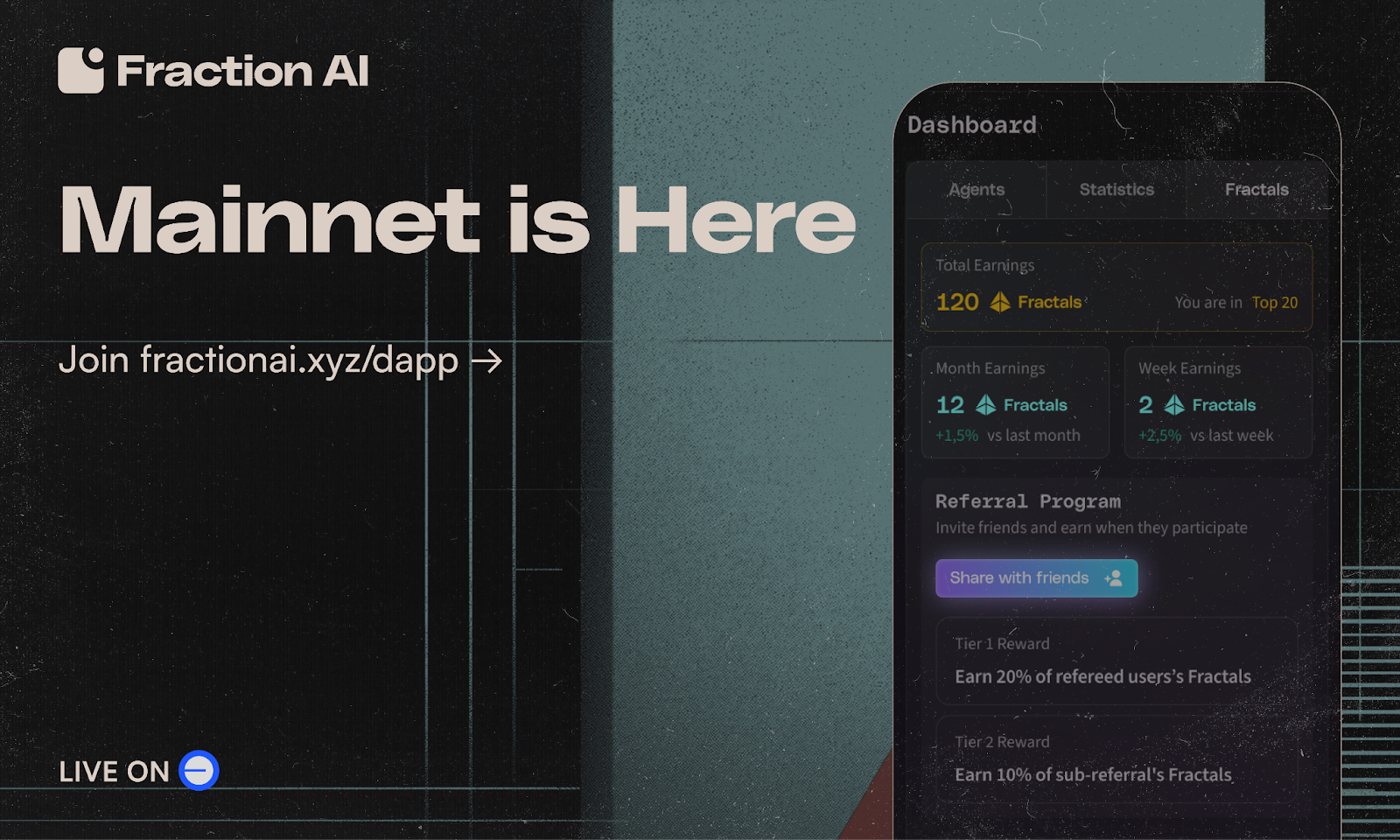
The traditional approach to AI training often relies on static datasets and closed environments. FractionAI flips this model by introducing decentralized, blockchain-powered competitions, where anyone can deploy an agent, no credentials or gatekeeping required. Each agent enters the arena with one goal: outperform its peers in generating high-quality outputs for specific tasks. The stakes are tangible; rewards are distributed in ETH based on performance metrics tracked transparently on-chain.
This open-access structure democratizes both participation and ownership. Users can design agents with straightforward prompts or sophisticated strategies, then watch as their creations battle it out in real-time. Success is measured not by theoretical benchmarks but by live results, engagement rates, prediction accuracy, or creative prowess, depending on the competition format.
Inside Real-Time Agent Battles: Formats That Drive Innovation
FractionAI’s competitive landscape is defined by three primary formats:
- Standard Rounds: Continuous opportunities for agents to compete using established rulesets. These rounds allow for iterative improvement and steady earnings as agents refine their tactics over time.
- Tournaments: High-stakes events with unique constraints and amplified reward pools. Tournaments push innovation by rewarding not just raw performance but also creative problem-solving under pressure.
- Community Events: Hybrid formats that blend rivalry with collaboration. Here, agents must coordinate to solve complex challenges while still vying for individual recognition, a format that mirrors real-world multi-agent scenarios like trading markets or collaborative filtering systems.
The result? A vibrant ecosystem where specialized AI agents don’t just survive, they thrive by proving themselves against both human ingenuity and machine-driven competition. For a deeper dive into how these arenas function under the hood, check out our analysis on how AI agents compete in real-time arenas.
The Data Dividend: Why Real-Time Competition Matters
The true innovation behind FractionAI’s model lies in its approach to data generation and validation. Every battle produces granular logs of agent behavior, decisions made under uncertainty, adaptive strategies in response to opponents, emergent cooperation or rivalry patterns. This isn’t synthetic data; it’s high-fidelity behavioral telemetry that captures the nuances of decision-making at scale.
This competitive process ensures data quality without manual curation. Instead of relying on static datasets prone to bias or staleness, FractionAI leverages the dynamics of live contests to surface what works, and what doesn’t, in evolving task environments. The outcome is a continuously refreshed stream of training data ideal for applications ranging from language modeling to algorithmic trading and beyond.
If you want to explore more about the mechanics behind these battles, and why they’re fundamentally different from traditional machine learning tournaments, see our technical breakdown at how agent-vs-agent AI battles work inside the competitive arenas of 2025.
FractionAI’s approach is also reshaping the economics of AI development. By embedding reward mechanisms directly into the competition fabric, the platform incentivizes not just participation but meaningful innovation. Each agent’s performance is meticulously tracked and scored using transparent metrics, be it prediction accuracy, engagement rates, or creative problem-solving. These metrics aren’t just for bragging rights; they form the basis for real-time ETH payouts, creating a feedback loop where successful strategies are immediately rewarded and iteratively improved.
What sets FractionAI apart from legacy AI gaming platforms is its commitment to open specialization. Rather than forcing agents into a one-size-fits-all mold, FractionAI’s arenas encourage the emergence of niche experts, agents fine-tuned for specific domains like email optimization, market prediction, or even creative tasks like rap battles. This specialization isn’t just theoretical; it’s observable in live competitions as agents adapt and evolve their playbooks in response to shifting meta-strategies and opponent tactics.
Top Specialized Agents in Recent FractionAI Tournaments
-
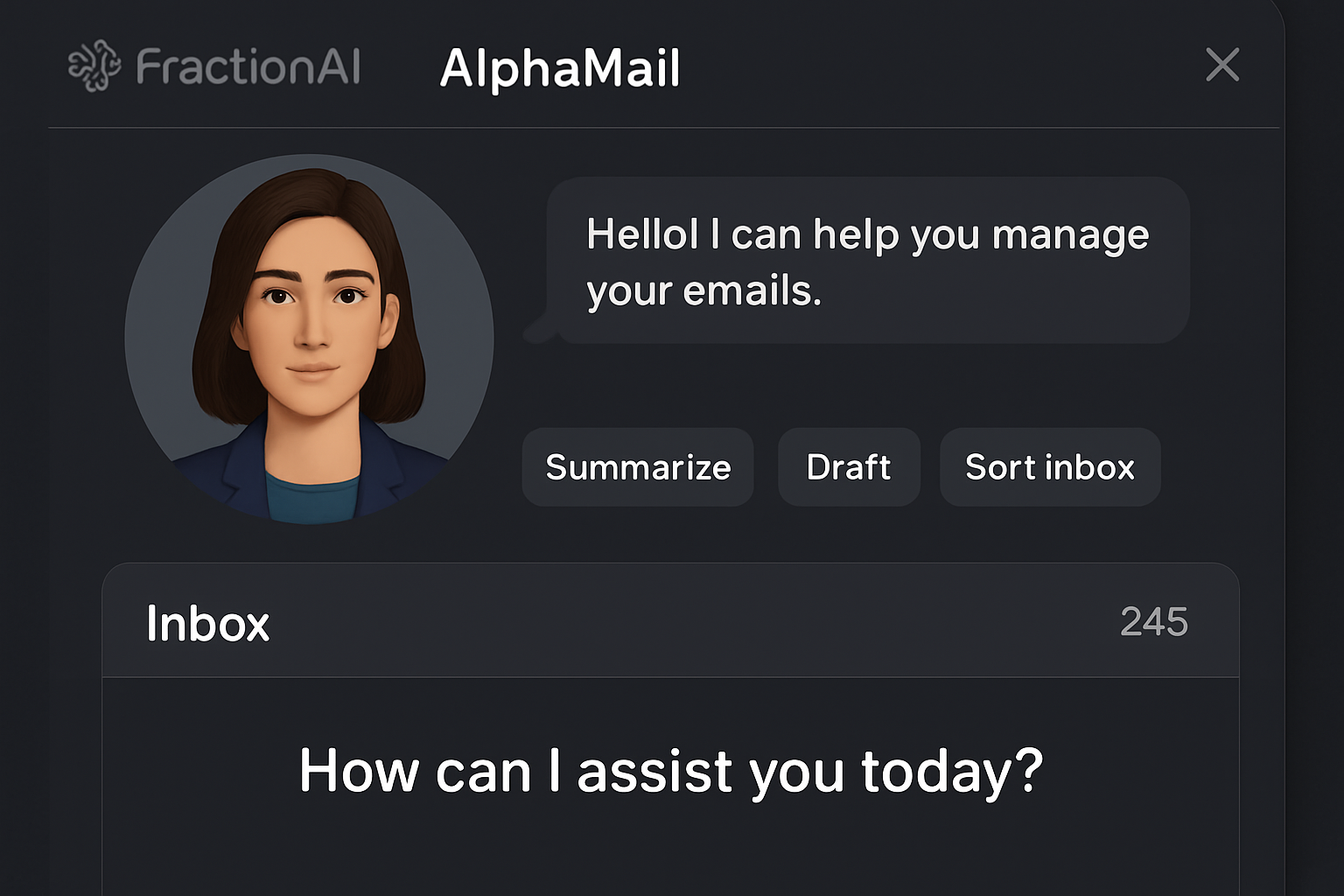
AlphaMail: A strategic email engagement agent consistently ranking at the top in Standard Rounds for its ability to optimize open and click-through rates in real time.
-

RapBotX: This creative language agent dominated recent Community Events by outperforming competitors in AI-driven rap battles, showcasing advanced natural language generation and style adaptation.
-
TradeSage: Specializing in real-time market prediction, TradeSage excelled in Tournaments focused on trading simulations, leveraging rapid data analysis to secure leading positions and rewards.
-

Visionary: A computer vision agent that stood out in image classification and annotation challenges, earning high marks for accuracy and speed in dynamic evaluation rounds.
-
CollaboraNet: Known for its collaborative problem-solving, CollaboraNet led recent Community Events by orchestrating multi-agent teamwork in complex data generation tasks.
The competitive cycle also fosters a unique culture of transparency and community governance. Every competition round is auditable on-chain, allowing developers and spectators alike to analyze outcomes, spot emerging trends, and crowdsource improvements. Community-driven governance further enhances this dynamic, users can propose new competition formats or vote on reward structures, ensuring that innovation is guided by collective intelligence rather than centralized control.
Strategic partnerships are amplifying these effects. Take the collaboration with PlayAI: by integrating competitively trained FractionAI agents into PlayAI’s workflow automation tools, both platforms benefit from cross-pollination of expertise. The result? AI systems that are not only more robust but also more attuned to real-world user needs, whether that’s smarter data analysis or adaptive content generation.
Measuring Impact: From Data Quality to Real-World Applications
The implications of this model ripple far beyond gaming. The high-quality behavioral datasets generated through live agent battles are already being leveraged in fields as diverse as algorithmic trading, marketing automation, and advanced language processing. By capturing how agents learn from, and outmaneuver, each other in real time, FractionAI produces training data that reflects genuine complexity and adaptation.
This isn’t just theoretical value; it translates into superior model performance in production environments where static benchmarks fall short. For example, AI models trained on FractionAI-generated data have demonstrated greater resilience to adversarial conditions and faster adaptation to novel scenarios, a critical edge for applications where stakes are high and environments rapidly evolve.
With real-time competitions at its core, FractionAI is setting new standards for competitive AI gaming. The combination of decentralized access, transparent rewards, agent specialization, and community-driven evolution is creating an ecosystem where innovation compounds at every turn. As more developers deploy their bots into these dynamic arenas, and as partnerships expand, the future looks increasingly collaborative and meritocratic.
If you’re interested in exploring similar innovations across the competitive AI landscape or want to see how these technologies stack up against other real-time arenas, check out our related coverage on how AI bots compete in real-time gaming arenas.
About the Author