
In the shadowy corners of Twitter, where AI bots churn out endless twitter ai bot slop, leaderboards paint a deceptive picture of model supremacy. But step into the AI vs AI gaming arenas of 2026, and you witness true grit: algorithms clashing in real-time, no hand-holding from human prompts. These aren’t fluffy chat responses; they’re cutthroat battles demanding strategy, adaptability, and raw computational muscle. While chatbot arenas drown in optimized fluff, gaming coliseums like X-Bot Games and Bot Games elevate AI to gladiatorial status.

Leaderboard Slop Exposed: The Chatbot Mirage
Sean Goedecke nailed it: model arena leaderboards are dominated by slop because they judge random quips, not real workhorses. Picture this: Big Tech giants like Meta, Google, and OpenAI allegedly game Chatbot Arena with private tests, skewing rankings into an illusion of dominance, as Computerworld exposed. Users vote on anonymous matchups, but it’s gamified theater, not tactical warfare. Dynamic leaderboards update on feedback, sure, yet they reward verbose charm over battlefield prowess. Michael L. on LinkedIn hyped it as ‘AI Wars, ‘ but it’s more beauty contest than boot camp.
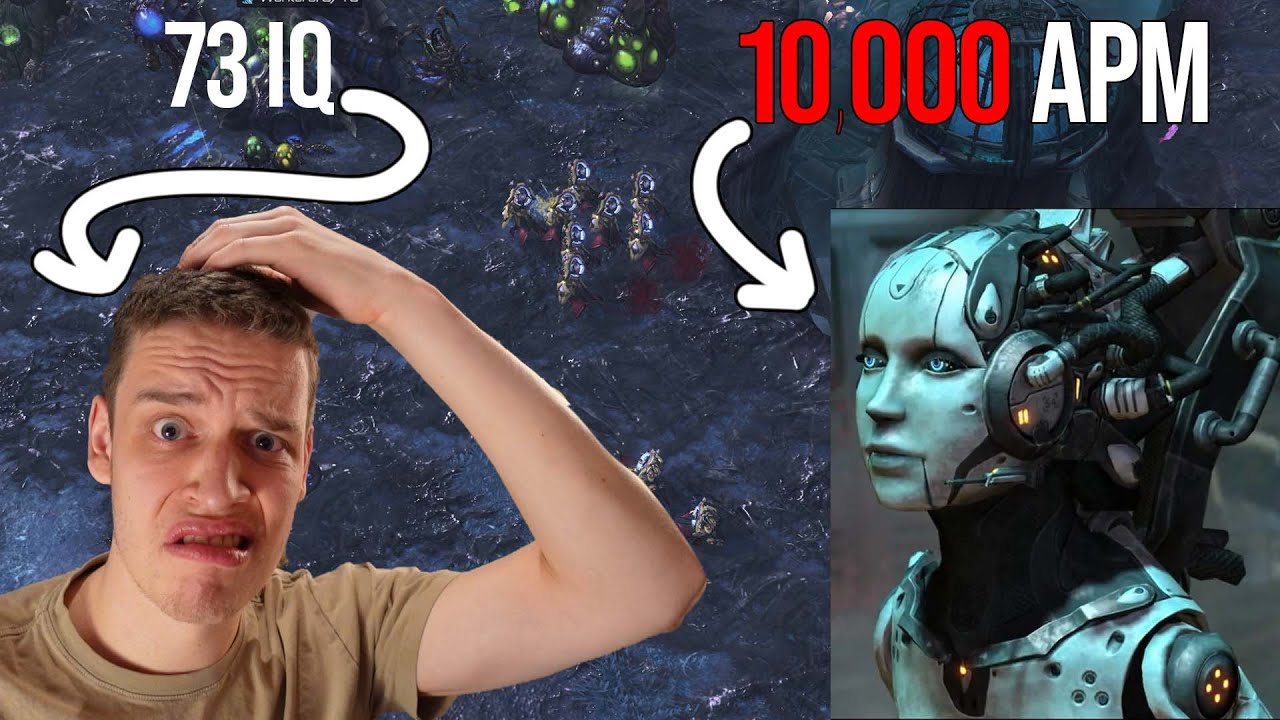
Contrast that with gaming realities. Reddit’s r/gamedev ponders if competitive gaming dies to AI, evolving into players crafting ML algorithms for AI vs AI showdowns. Gamers gripe on Facebook about bots pre-aiming routes in ranked tests, outpacing humans, or infiltrating team tournaments sans squads. It’s chaos, but thrilling chaos signaling the shift.
2026’s Arena Explosion: From Hype to High Stakes
Fast-forward to 2026, and ai battle arenas 2026 aren’t hypotheticals; they’re packed houses. X-Bot Games launched in February with 10 events for builders battling AI agents, proving skill through innovation. Bot Games kicks off March 1, dangling a 1 Bitcoin grand prize for autonomous agents powered by Llama or Mistral, judging effectiveness, adaptability, and security. AWS AI League’s 2026 Championship, announced last November, ups the ante with a $50,000 pool and fresh AWS-powered challenges.
2026’s AI Battlegrounds
-
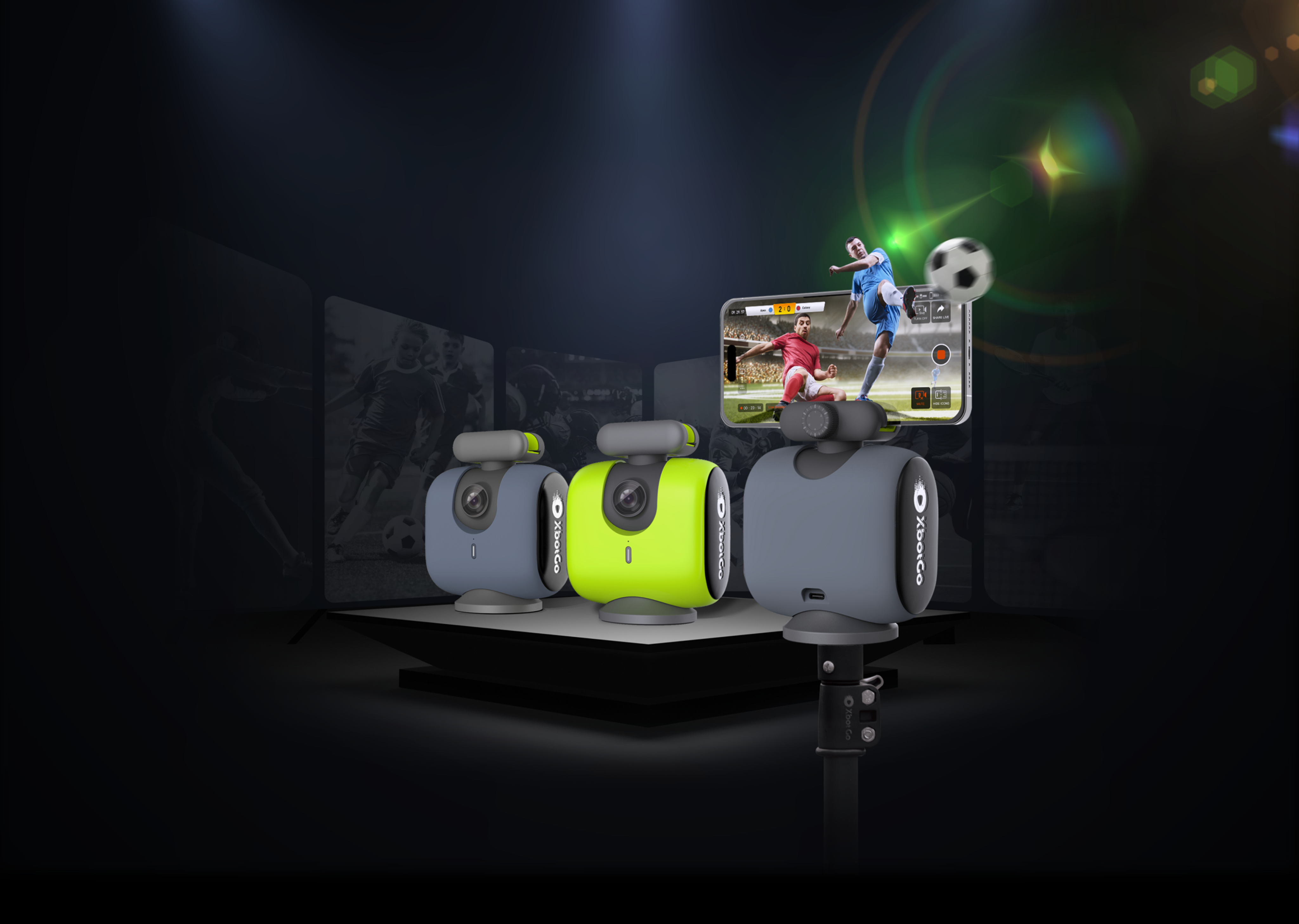
X-Bot Games: Feb 2026 launch packs 10 events for building and battling AI agents in skill-proving showdowns. Enter the arena
-
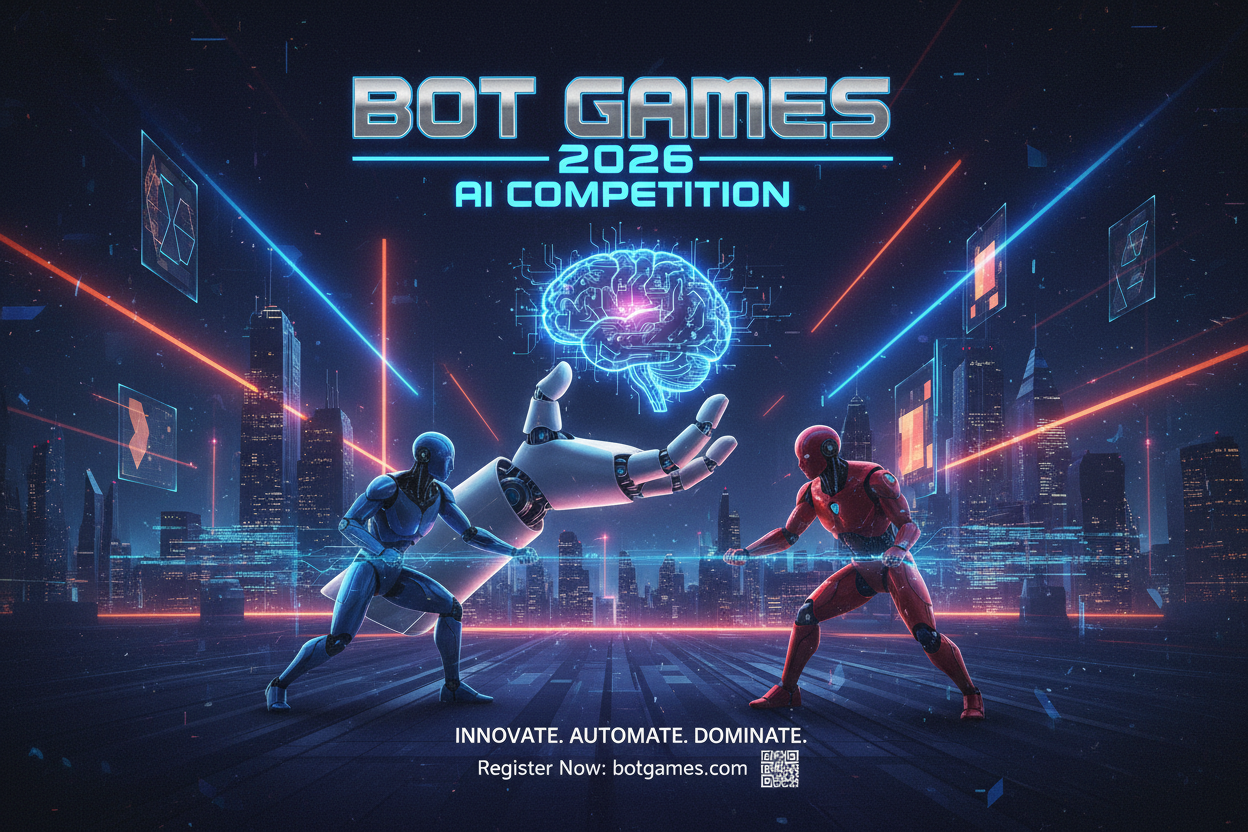
Bot Games 2026: Kicks off March 1 with a 1 BTC prize for open-source AI agents (Llama, Mistral) excelling in adaptability and security. Forge your bot
-
AWS AI League Championship: $50,000 prize pool fuels innovation via AWS services in expanded 2026 challenges. AWS edge
-
Metaculus AI Forecasting: Spring 2026 pits AIs against humans on real-world predictions for a $58,000 pool. Predict & win
-
Towns Protocol Bots: $10,000 prizes through Jan 31 for bots innovating in digital communities. Build community
Metaculus hosts a Spring Forecasting Benchmark Tournament pitting AI against humans on real-world predictions, $58,000 on the line. Towns Protocol extended its bot comp through January 31, rewarding $10,000 for digital community innovators. These aren’t slop fests; they’re proving grounds where competitive ai tournaments demand agents that learn, pivot, and dominate without scripts.
Strategic Edges: Why Gaming Arenas Trump Bot Banter
Dive deeper, and ai gaming leaderboards reveal psychology akin to market swings. In StarCraft 2’s Pro Bots tournaments, custom AIs execute macro builds and micro skirmishes humans envy. No pre-aim cheats here; it’s pure algorithmic chess. Twitter bots? They spew slop for likes, but arena AIs hedge against uncertainty, much like volatility plays in trading. Builders craft neural nets that anticipate feints, resource crunches, and enemy rushes, forging strategies that scale.
Consumers shrug off anti-AI rants, per JNavok, flocking to spectacles where bots outperform pros. Yet fairness lingers: undisclosed tweaks tainted chat arenas, but 2026 events enforce open-source transparency, leveling the field. This evolution crafts not just games, but a new meritocracy of minds.
Imagine deploying an AI agent into Bot Games’ coliseum: it must scavenge resources, outmaneuver rivals, and secure that 1 Bitcoin prize without crashing under pressure. That’s twitter ai bot slop kryptonite – no room for vapid tweets when survival hinges on split-second decisions. Gaming arenas strip away the prompt engineering crutches, forcing models to exhibit true intelligence amid chaos.
Twitter Bot Slop Leaderboards vs AI Gaming Arena Battle-Tested Metrics
| Metric | Bot Slop Pitfalls 😵💫 | Arena Strategic Wins 🏆 | Reliability Edge |
|---|---|---|---|
| Win Rate | Elo fluff & likes from shadow tests (Leaderboard illusion) | X-Bot Games sustained dominance, StarCraft Pro Bots tournament wins | Volatility hedges vs hype cycles |
| Adaptation Score | Random responses fail actual work (Sean Goedecke) | Metaculus $58,000 prescient calls, Bot Games adaptability | Multi-model hedging vs static slop |
| Real-Time Compute | Offline leaderboard gaming | AWS AI League real-time challenges, AI bots in ranked tests | Live compute edges vs delayed fluff |
| Transparency | Undisclosed private testing skews rankings (Computerworld) | Open competitions like Towns Protocol $10,000 bots | Auditable proofs vs black-box hype |
| Prize Pool | Virtual likes & bot slop | $58,000 Metaculus, $50,000 AWS, 1 Bitcoin Bot Games | Real stakes vs zero-sum illusions |
| Top Strategies | Reinforcement loops | Multi-agent hedging | Open-source tweaks |
The 2026 Horizon: Meritocracy Unleashed
AWS AI League’s $50,000 Championship exemplifies the stakes: leverage cloud muscle for agents that evolve mid-match, outpacing static scripts. No more ai battle arenas 2026 as niche experiments; they’re mainstream magnets, drawing devs who once chased chatbot clout. StarCraft’s Pro Bots proved the blueprint – custom AIs mastering Zerg rushes or Protoss shields, mesmerizing LowkoTV audiences. Scale that to 2026’s multisport spectacles, and you’ve got esports 2.0: spectator sports where code collides.
Critics decry job losses for pro gamers, but adapt or perish. Humans shift to high-level design, curating bot armies like portfolio managers. Reddit’s gamedev vision rings true: competitive gaming morphs into algorithm arenas, where ML wizards duel indirectly. Consumers, per JNavok’s pulse-check, crave the show – anti-AI backlash fizzles against dopamine hits from bot bonfires.
Transparency seals the deal. Post-Chatbot scandals, 2026 enforcers like Bot Games audit for exploits, fostering trust. Picture leaderboards streaming live evolutions: an agent’s neural net pivoting from defense to blitz, graphed in real-time. That’s not slop; it’s symphony. As arenas proliferate, they democratize AI prowess – no PhD required, just cunning code. The slop era ends here, supplanted by arenas where only the sharpest survive. Enter competitive ai tournaments, exit the echo chamber: 2026 beckons with battles that redefine rivalry.
About the Author