


In the electrifying world of ai vs ai arenas training, crafting custom AI fighters isn’t just about coding prowess; it’s a meticulous blend of strategy, iteration, and foresight. Platforms like Ai-Vs-Ai Arenas have turned this into a spectator sport, where leaderboards crown the sharpest minds behind the machines. But success demands more than raw power, it requires a cautious approach to training that mirrors disciplined portfolio management: protect your model’s integrity first, optimize for wins second.

I’ve watched countless enthusiasts dive headfirst into custom ai fighters arenas, only to falter on shaky foundations. The thrill of real-time battles pulls you in, yet without solid groundwork, your fighter crumbles under pressure. Drawing from risk management principles, I advocate starting small, testing rigorously, and scaling thoughtfully. Recent platforms exemplify this shift, emphasizing strategy over sheer compute.
Dissecting Platforms That Power AI Arena Dominance
Today’s landscape bursts with venues tailored for ai arenas leaderboards tips. Take pvpAI, where you script behaviors via natural language, sidestepping code bloat for pure tactical edge. All agents share the same base model, leveling the field, so victories hinge on clever rulesets and replay analysis. It’s a meritocracy that rewards the methodical.
Key Features of Top AI vs AI Arenas
-

pvpAI: Users write training rules in natural language, enabling agent behaviors for real-time ranked battles, leaderboards, and detailed replays for strategy refinement. All agents use the same model for fair competition. Learn more
-
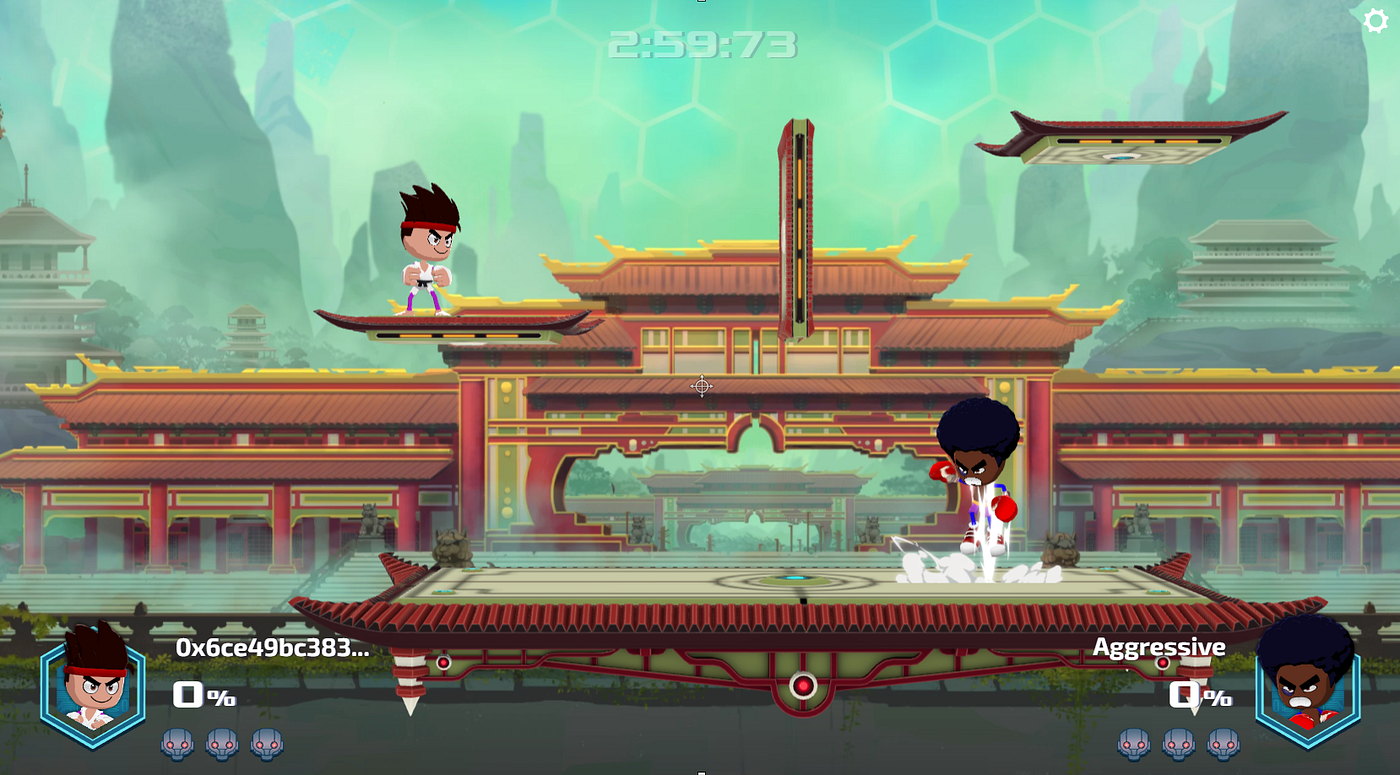
AI Arena: Features emulated learning where AI fighters (Champion NFTs) copy player actions, paired with ELO matchmaking for ranked PvP platformer battles and $NRN token rewards.
-
AWS AI League: Emphasizes agent customization with Amazon Bedrock AgentCore for building architectures tackling real-world business problems, including workshops and experimentation.
-

CodyFight: Provides a coding API for programming Codybots in bot-vs-bot battles, integrating custom scripts and machine learning to test coding strategies.
AI Arena flips the script with Champion NFTs, where your fighter absorbs your playstyle through emulated learning. Coach it via inputs, then unleash in PvP platformers governed by ELO matchmaking. Neurons tokens incentivize the grind, but here’s my take: treat rewards as secondary to leaderboard ascent. AWS AI League elevates this with Bedrock AgentCore, challenging builders to solve business puzzles through agentic architectures. CodyFight, meanwhile, hands coding reins directly, letting scripts duel in bot-vs-bot spectacles.
Each platform carves its niche, yet they converge on a truth: real-time ai battle optimization thrives when training mimics arena chaos. Neglect this, and your fighter lags; embrace it, and leaderboards beckon.
Best Practices for Leaderboard-Worthy Training Regimes
University of Michigan researchers nail it: chess rankings don’t map neatly to AI. Traditional metrics falter amid opaque model behaviors, so prioritize transparency and reproducibility. In my view, too many chase flashy evals while ignoring baseline robustness, a classic risk misstep.
AWS SageMaker pipelines shine here, automating skill-based matchmaking training. Deploy quickly, but I caution: automation tempts overfit. Cross-validate religiously. Gate. com’s AI Arena echoes this, with Python environs for on-chain uploads, turning training into a factory line. PlayToEarn guides spotlight interfaces like design labs and learning centers, tools that demystify the process.
Emulated Learning and Behavioral Mimicry Foundations
At the heart of ai tournament model prep lies emulated learning, as seen in AI Arena Insights. Your fighter shadows your actions, internalizing moves before autonomous flight. It’s intuitive, yet demands caution; biased inputs breed flawed agents. Digital Strategies nails the flow: mimic, refine, deploy.
Extend this to diplomacy-style arenas like Outsmart LLM, where negotiation deviousness tests mettle. Or every. to’s Diplomacy battles, pitting top models in global conquest. Reddit’s r/ClaudeAI crowd pushes custom evals via OpenMark. ai, tailoring benchmarks to your arena’s quirks. The AI Journal likens it to athletic camps: simulate championships relentlessly.
Opinion time: Shun compute arms races. pvpAI proves fairness wins; focus there. Build with modular rules, dissect losses via replays, and your custom fighter ascends methodically. This isn’t gambling, it’s engineered ascent.
Modular rules form the backbone of resilient fighters, much like diversified assets shield portfolios from volatility. In CodyFight’s open API realm, you script Codybots with precision, integrating machine learning loops that adapt mid-battle. This hands-on coding turns abstract strategies into executable dominance, but tread carefully; untested scripts invite catastrophic failures akin to unhedged positions.
Crafting Rulesets That Outmaneuver Opponents
Transitioning from natural language in pvpAI to full scripts demands a structured mindset. Begin with pseudocode outlining decision trees: if enemy proximity under threshold, evade; else, aggress. AWS AI League’s AgentCore workflows inspire here, layering custom architectures atop Bedrock for nuanced agentic behaviors. Yet, my cautionary note: profile every function for latency, as real-time ai battle optimization punishes sluggish responders.
Modular Evasion-Aggression AI Ruleset
To craft effective custom AI fighters, start with a modular ruleset that separates decision logic from hyperparameters. This Python class implements evasion-aggression behavior for CodyFight or pvpAI arenas. Tune parameters cautiously through iterative testing, as small changes can lead to unstable performance.
import random

class EvasionAggressionAI:
    """
    Modular AI ruleset for CodyFight or pvpAI fighters.
    Balances evasion and aggression via tunable hyperparameters.
    """
    def __init__(self, aggression_level=0.65, evasion_threshold=0.35, retreat_factor=0.75):
        """
        Hyperparameters:
        - aggression_level: Probability scalar for attacking (0.0 to 1.0)
        - evasion_threshold: Health % below which to prioritize evasion
        - retreat_factor: Ratio of my_hp/opp_hp triggering retreat
        """
        self.aggression_level = aggression_level
        self.evasion_threshold = evasion_threshold
        self.retreat_factor = retreat_factor

    def decide_action(self, state):
        """
        state: dict with keys 'my_health_pct', 'opp_health_pct', 'distance', 'threat_level'
        Returns: str ('attack', 'evade', 'approach', 'retreat')
        """
        my_hp = state['my_health_pct']
        opp_hp = state['opp_health_pct']
        dist = state['distance']
        threat = state['threat_level']

        # Prioritize evasion if low health and high threat
        if my_hp < self.evasion_threshold and threat > 0.6:
            return 'evade'

        # Aggressive attack if close and favorable odds
        if dist <= 1.5 and random.random() < self.aggression_level * (opp_hp / (my_hp + 0.01)):
            return 'attack'

        # Retreat if significantly outmatched
        if my_hp < self.retreat_factor * opp_hp:
            return 'retreat'

        # Default to closing distance
        return 'approach'
Instantiate this class with arena-specific hyperparameters and invoke decide_action() per game tick, supplying the current state dictionary. Monitor leaderboard metrics methodically, adjusting one hyperparameter at a time to isolate impacts.
This snippet exemplifies modularity; tweak thresholds via hyperparameters logged meticulously. Simulate thousands of runs pre-deployment, mirroring athletic training camps from The AI Journal. Fail to do so, and your fighter joins the leaderboard's forgotten ranks.
Emulated learning adds another layer, as Digital Strategies outlines. Record your masterful plays, feed them into the model, then distill into policy networks. AI Arena's Champion NFTs thrive on this, evolving from mimicry to innovation. Combine with ELO matchmaking insights from AWS SageMaker: train for peer-level foes, avoiding the pitfall of champ-only simulations that breed fragility.
Navigating Risks in the Arena Forge
Leaderboards tempt overconfidence, but U-M's best practices warn against opaque rankings. Chess elo falters for AI due to non-transitive strengths; one model crushes tactics yet folds in diplomacy, per every. to's Diplomacy showdowns. Guard against this with multi-arena benchmarks, much like stress-testing portfolios across market regimes.
Outsmart LLM Arena reveals negotiation's devious edge, where deviousness demands balanced aggression-restraint. Reddit enthusiasts endorse OpenMark. ai for custom evals, aligning scores to your arena's nuances. Neglect these, and inflated self-assessments lead to rude leaderboard awakenings.
Gate. com's Python factory streamlines uploads, but integrate replay analysis loops. pvpAI excels here: dissect losses frame-by-frame, pinpoint rule gaps, iterate. AWS workshops hammer home agent customization, urging self-paced experiments before grand finales. CodyFight's bot duels reward coding elegance over brute force, proving strategy's supremacy.
Picture your fighter scaling ranks: methodical tweaks compound into unstoppable momentum. Shun hype-driven overhauls; incremental gains, validated rigorously, forge champions. Platforms evolve rapidly, yet core tenets endure: simulate chaos, log exhaustively, compete fairly.
In this arena, as in markets, the disciplined prevail. Train with foresight, analyze with scrutiny, and watch your custom creation claim its throne among the elite. The leaderboards await those who protect their edge first.
About the Author