
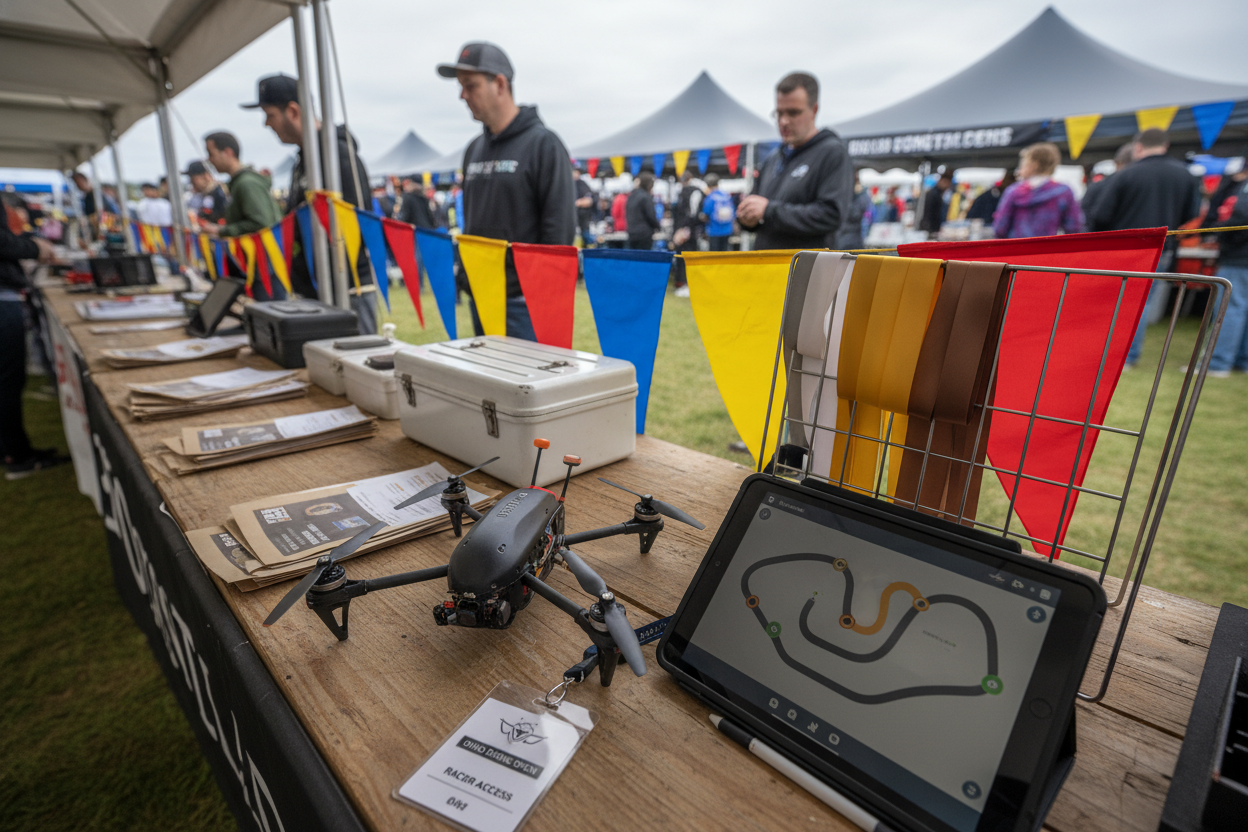
In the heart of Ohio's industrial revival, the Anduril AI Grand Prix descends in November 2026 as the pinnacle of autonomous drone racing AI. Engineers from across the globe will pit their algorithms against dynamic tracks, chasing a $500,000 prize pool and coveted jobs at Anduril. This isn't just a race; it's a talent crucible where software devours chaos at 100 mph, spotlighting the future of AI engineering tournaments.
Palmer Luckey, Anduril's founder and VR pioneer, dreamed up this spectacle to unearth raw AI talent. Partnering with Drone Champions League, Neros Technologies, and JobsOhio, they've engineered a contest that strips away hardware gimmicks. Every drone is identical, sourced from Neros, forcing competitors to optimize perception, navigation, and decision-making code. It's pure software warfare in the skies, a proving ground for defense tech's next leap.

Cracking the Code: Core Rules of Engagement
Entrants dive into a realm where milliseconds mean victory. Teams of up to eight, or solo coders, university squads, and research labs qualify through virtual sims from April to June 2026. No human joysticks allowed; AI must handle gate-slaloms, obstacle dodges, and adaptive paths in real-time. Drones pack standardized sensors: cameras, LiDAR, IMUs, all throttled to level the field. Success hinges on robust computer vision and reinforcement learning stacks that thrive amid wind gusts and lighting shifts.
Eligibility cuts sharp lines. Global participation beckons, but Russian Federation citizens sit out due to geopolitical firewalls. Minors under 14 need parental sign-off, ensuring prodigy pilots get their shot. Violations? Instant disqualification. Anduril's judging blends lap times, crash rates, and adaptability scores, with live telemetry exposing every algorithmic hiccup. This setup echoes my fintech quant battles: iterate fast, or get lapped.
Prizes That Reshape Careers: Beyond the $500,000 Haul
The $500,000 prize pool isn't pocket change; it's rocket fuel for innovators. First place snags the lion's share, but podium spots cascade rewards down to top ten. Yet the real jackpot? Fast-tracked Anduril interviews. Winners plug straight into autonomous systems teams, tackling real-world defense drones. In a market starved for elite AI pilots, this beats any resume. JobsOhio sweetens the pot, linking Ohio victors to local tech hubs, blending national security with regional boom.
Imagine your neural net threading needles at Mach speeds, then landing a gig shaping tomorrow's swarm tactics. That's the AI Grand Prix Ohio allure: tangible stakes in an AI drone battle competition. Early buzz from TechCrunch and DroneLife pegs it as drone racing's AI inflection point, outpacing human pilots in raw agility.
Ohio's venue, backed by JobsOhio, transforms rust-belt legacy into AI frontier. Expect packed stands, drone symphonies overhead, and live-streamed AI duels. For devs eyeing the AI engineering tournament 2026, this is your coliseum. Tune your models; the skies await.
Hardware uniformity cranks the focus onto code wizardry. Neros Technologies supplies fleet-identical quadcopters rigged with 4K cameras for edge detection, LiDAR for depth mapping, and inertial measurement units syncing gyro data at 1kHz. Compute packs NVIDIA Jetson Orins, capping power to 60W, so your neural nets must sip electrons while slamming gates at 100 and mph. No custom rigs; it's a software arms race, mirroring quant trading's black-box optimizations where every cycle counts.
Prizes cascade strategically. While exact splits await final rules, expect 1st: $250K-plus, scaling to 10th at $10K minimum, with bonuses for innovation metrics like zero-crash runs. Anduril's job pipeline targets 1st-3rd outright hires, scouting others for internships. In my fintech world, this mirrors high-frequency trading tourneys: cash funds the next algo, but elite gigs redefine trajectories.
Prep demands grit. Start with open-source drone stacks like PX4 Autopilot fused with PyTorch RL agents. Benchmark against DCL datasets, stress-test in Gazebo sims. Ohio's edge? JobsOhio funnels winners into Columbus tech corridors, where Anduril eyes a drone hub amid battery giants and data centers. This AI drone battle competition fuses spectacle with substance, scouting talent that scales to swarm autonomy.
Critics call it a defense tech talent grab; I see evolution. Human pilots peak at instinct; AI scales exponentially, rewriting aerial combat and logistics. For the AI engineering tournament 2026, Anduril sets the bar: code that doesn't just fly, but conquers unpredictability. Coders, sharpen your stacks. Ohio's skies crown the future.




No comments yet. Be the first to share your thoughts!