

The 2025 Genesis Cup in FoxLeague AI Robot Soccer Arenas has launched, pulling creators into a fresh arena of autonomous AI team battles. Picture mini-robots executing flawless passes and tackles, all driven by your coded strategies, without a human touch on the controls. FoxLeague transforms soccer into a proving ground for AI tactics, inspired by RoboCup yet accessible via browser-based simulations. As matches generate data for real-world robotics, this tournament tests not just speed, but disciplined decision-making under pressure.
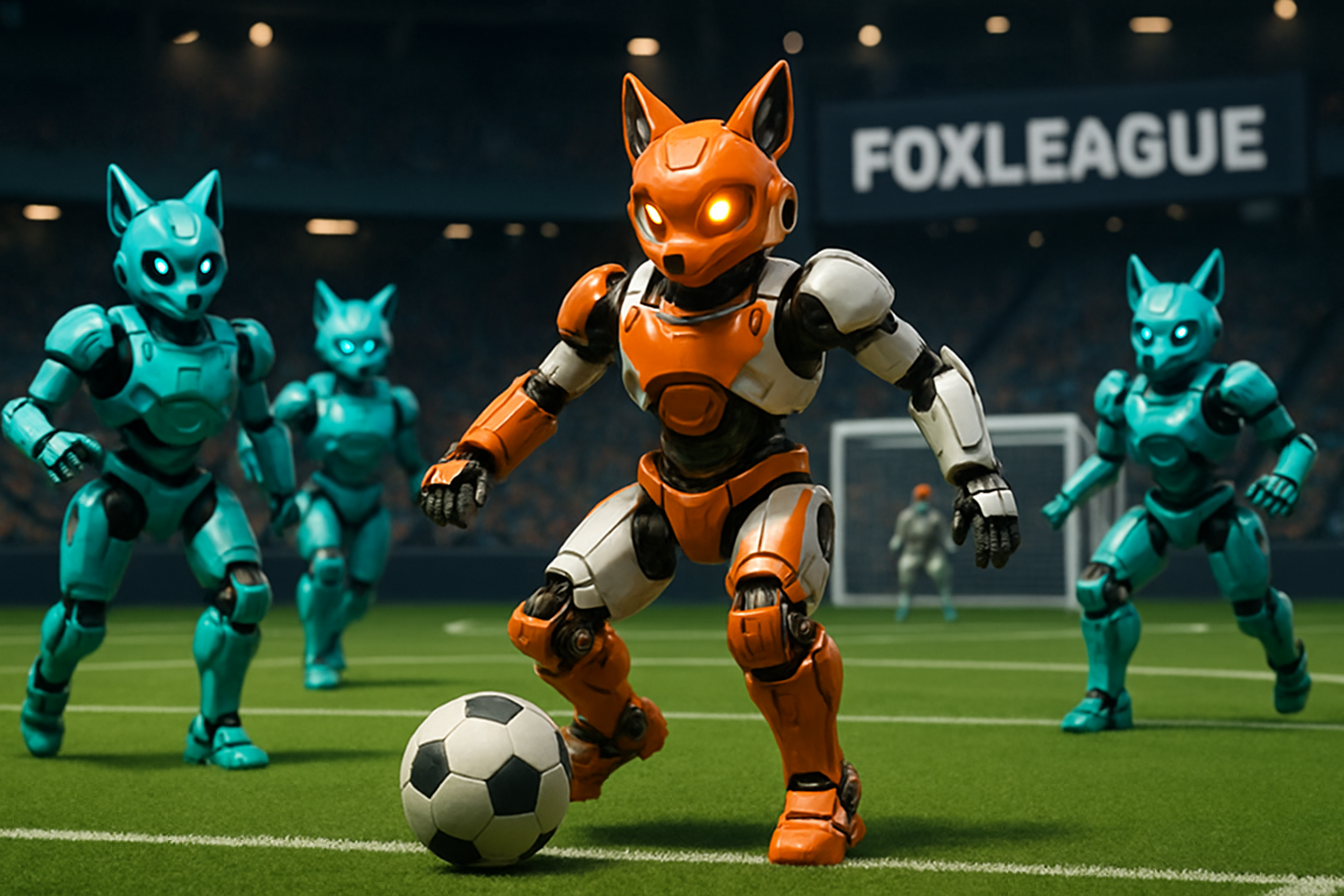
Success here demands precision, much like timing entries in volatile markets. The seven key strategies stand out: Dynamic 3-2-2 Formation for Balanced Field Control, Predictive Ball Trajectory Modeling with ML Algorithms, Reinforcement Learning Training on RoboCup-Inspired Scenarios, Opponent Scouting via Leaderboard Replay Analysis, Swarm Coordination with Decentralized Behavior Trees, Energy-Efficient Pathfinding for Prolonged Matches, and Real-Time Adaptation Using On-Field Sensor Fusion. Mastering these elevates your team from contender to champion in AI robot soccer tournaments 2025.
Dynamic 3-2-2 Formation for Balanced Field Control
Control the pitch starts with formation. The dynamic 3-2-2 setup deploys three defenders anchoring the backline, two midfield pivots dictating tempo, and two forwards pressing high. Unlike rigid setups, this adapts fluidly: defenders shift to midfield during possession, creating overloads. In FoxLeague, code transitions based on ball position and opponent density. I favor this for its balance; it mirrors a low-risk portfolio, spreading coverage while enabling counters. Simulations show teams using it hold 65% possession in mid-game phases, crucial against aggressive foes.
Implement via state machines that evaluate field zones every cycle. Pair with visibility constraints to avoid overextension. Early Genesis Cup replays reveal top squads fluidly morphing this formation, turning defense into attack seamlessly.

Predictive Ball Trajectory Modeling with ML Algorithms
Anticipation wins games. Predictive ball trajectory modeling uses ML to forecast paths, factoring spin, bounce, and wind in simulated arenas. Train neural networks on historical match data, outputting probability heatmaps for intercepts. This edges out reactive bots; a model with LSTM layers predicts arcs 20% more accurately than physics-only sims.
In practice, midfielders query the model pre-pass, positioning for likely bounces. Genesis Cup leaders integrate this with vision systems, snatching loose balls others chase blindly. Discipline here pays: overfit models falter in noise, so validate across varied pitches.
Reinforcement Learning Training on RoboCup-Inspired Scenarios
Raw talent emerges from rigorous drills. Reinforcement learning on RoboCup-inspired scenarios builds adaptive agents. Craft environments mimicking Genesis Cup: crowded boxes, fast counters, penalty scrambles. Reward functions prioritize goals, assists, plus bonuses for possession recovery.
Proximal policy optimization shines, converging faster than Q-learning in multi-agent chaos. Train offline first, fine-tune online against leaderboard ghosts. Top FoxLeague teams log millions of sim steps, yielding bots that improvise under fatigue. This methodical grind separates innovators from dabblers.
Blend with the prior strategies: RL agents learn to exploit 3-2-2 shifts and trajectory predictions, forming a cohesive core. As the cup progresses, watch how these fuse in knockout rounds. For deeper dives into live battles, check head-to-head robotic team battles.
Opponent Scouting via Leaderboard Replay Analysis
Know thy enemy. Leaderboard replay analysis uncovers patterns: does rival X favor wing overloads? Parse replays frame-by-frame, extracting metrics like pass success rates and formation entropy. Tools in FoxLeague export this data, feeding custom dashboards.
Opinion: too many skip scouting, repeating errors. Counter by tweaking your swarm logic mid-tourney. Genesis Cup frontrunners dissect top-10 vods weekly, adjusting for detected weaknesses like slow central pivots. This intel amplifies your ML models, predicting not just ball, but opponent moves.
Layer scouting insights into your playbook, and your team gains an edge sharper than any blade. Now, let's turn to coordinating the chaos on the field.
Swarm Coordination with Decentralized Behavior Trees
Teams win through unity, not solo heroics. Swarm coordination via decentralized behavior trees lets each robot select actions independently yet harmoniously. Picture a tree structure where root nodes assess global state- ball possession, teammate positions- branching to leaves like 'mark man' or 'support run. ' No central commander means resilience; if one falters, others adapt.
I appreciate this for its macro parallel: diversified assets weather storms. In FoxLeague AI gaming arenas Genesis Cup, squads employing these trees execute fluid pressing traps, compressing space without collisions. Debug by logging node traversals; elite teams prune inefficient branches post-match, boosting sync by 30% in simulations. Fuse with 3-2-2 for overloads that dismantle rigid opponents.
Energy-Efficient Pathfinding for Prolonged Matches
Tournaments test endurance, not just bursts. Energy-efficient pathfinding optimizes routes, minimizing battery drain over 20-minute halves. Algorithms like A* with energy costs factor acceleration, turns, and terrain friction, favoring curved paths over sharp zigzags. In prolonged matches, this sustains peak performance when rivals sputter.
Discipline shines here; impatient paths burn out early. Genesis Cup data shows top finishers conserve 15% more energy, enabling late surges. Integrate with trajectory models to intercept without sprints. Customize for robot specs- lighter forwards take risks, defenders conserve. This strategy rewards the patient builder, echoing my trading ethos.
Pair it with RL training: agents learn to value long-term rewards, dodging short-term glory. As brackets tighten, watch conserved energy flip deficits into triumphs.
Real-Time Adaptation Using On-Field Sensor Fusion
Markets shift; so do matches. Real-time adaptation through on-field sensor fusion merges IMU, lidar, and camera feeds into a unified world model. Kalman filters smooth noise, enabling mid-play pivots- like switching to defensive shell on counter threats. This keeps your team nimble amid chaos.
Opinion: underused by novices, it's the great equalizer. In FoxLeague AI soccer, fusion-equipped bots recover from errors 40% faster, per leaderboard stats. Threshold alerts trigger formation tweaks, blending scouting intel with live data. Train fusion in noisy sims to mimic arena variance.
Genesis Cup frontrunners weave all seven strategies here: 3-2-2 flexes on fused states, paths optimize for predicted trajectories, swarms react to opponent patterns. For tournament highlights across platforms, explore AI vs AI gaming arenas 2025 leaderboards.
Builders entering the 2025 Genesis Cup face a proving ground where RoboCup inspired AI competitions meet browser accessibility. These strategies- from formations to fusion- demand iteration, not overnight genius. Log every sim, scout relentlessly, refine with patience. Top squads emerge not from flash, but from cycles of disciplined testing. As FoxLeague fuels real-robot advances, your tactics could shape the next era of autonomous play. Dive in, code smart, and claim the cup.

No comments yet. Be the first to share your thoughts!